A factory-floor perspective on warranty terms: what goes wrong, what it costs, and how to write a clause that actually protects your margin.
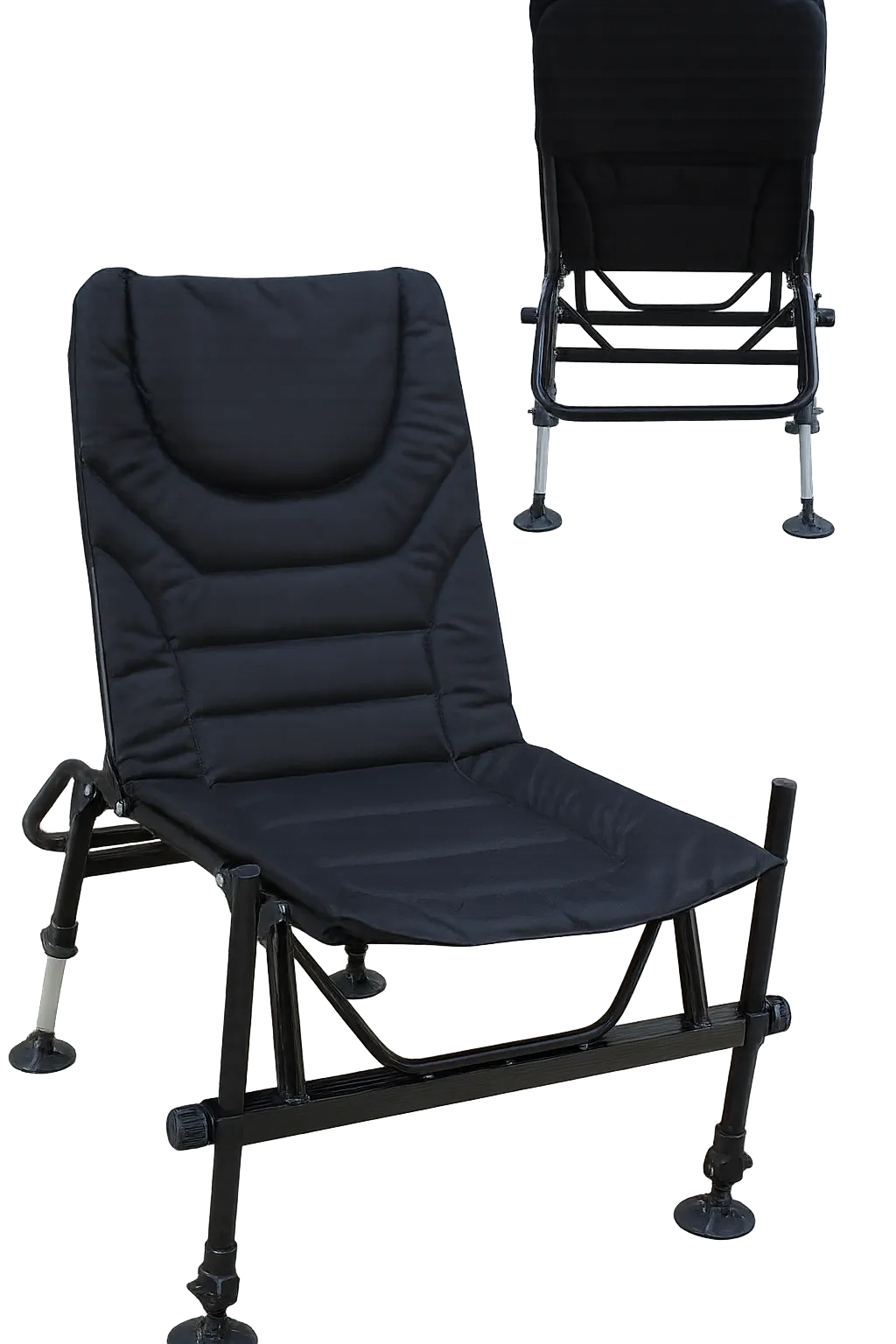
Last Tuesday I stood in a warehouse outside Rotterdam with a Dutch distributor who hadn't slept well in three days. On the floor in front of us: 47 returned carp bedchairs, stacked four high, every single one with the same failed leg-cap stitching. The warranty clause in his manufacturer contract was eleven words: "Manufacturer warrants goods against manufacturing defects for 12 months." No definition of what counted as a defect. No remedy timeline. No penalty for non-response.
When he sent photos to the factory, their reply came back in six hours: "normal wear and tear — we can offer 5% credit on next order." The stack represented €18,300 at wholesale. His legal options? Effectively zero, because the contract never specified who paid return freight, who decided what a defect was, or what happened when the parties disagreed.
This is not an outlier. Over the past two years I have watched at least a dozen European buyers discover that their after-sales protection was only as strong as a single vague sentence. A warranty that reads like boilerplate is not protection. It is a liability with your signature at the bottom.
The Warranty You Negotiate Today Is a P&L Line Item Six Months from Now
Most B2B buyers treat warranty terms as the last page of a purchase order, something to skim before signing. That is a mistake that costs real money. A 3% defect rate on a 500-unit bedchair order means 15 returns. If your warranty clause does not specify who covers return freight, inspection costs, and replacement shipping, those 15 units can erase the margin on the remaining 485.
I have seen the math work out. One UK buyer tracked their warranty-related costs over 18 months across three manufacturers.
| Manufacturer | Warranty Type | Return Rate | Avg Claim Resolution | After-Sales Cost / Unit |
|---|---|---|---|---|
| Manufacturer A | Vague one-liner | 4.2% | 47 days | £4.80 |
| Manufacturer B | Detailed, defined timelines | 2.1% | 11 days | £1.30 |
| Manufacturer C | No formal clause | 5.8% | 90+ days | £7.20 |
Same product category, same price point, same customer base. The difference was entirely in the contract language. The cost of writing a proper warranty clause is a few hours with a procurement manager and a factory contact who understands what goes wrong in the field. The cost of not writing one is measured in warehouse floor space occupied by returned goods, customer service hours burned on disputes, and orders that do not repeat.
Reading a Warranty Clause: The Three Provisions That Determine Everything
When I review a manufacturer contract with a buyer, I go straight to three places. Everything else is filler.
First: the defect definition. "Manufacturing defect" means nothing without a standard. The clause needs to reference a specific inspection benchmark, AQL 2.5 or AQL 1.5, measured against an approved pre-production sample that both parties signed off on. Without that reference point, every dispute becomes a negotiation from scratch.
Second: the remedy timeline and cost allocation. A proper warranty clause answers five questions. Who pays return freight? Who inspects the defective unit? Who decides whether it is a defect or misuse? How long does the manufacturer have to respond? What happens if they do not respond? I have seen a clause that read "manufacturer to replace or refund at its discretion within a reasonable time." "Reasonable time" in that case turned out to be seven months.
Third: the remedy structure. Credit against future orders is the most common approach, and the most dangerous for buyers, because it locks you into the same manufacturer. A replacement-shipment clause, where the factory ships replacements with the next container at their cost, is stronger. A refund clause is strongest but hardest to negotiate. The middle ground that works in most OEM relationships: replacement shipment for defects exceeding 2% of the order, credit note for defects below that threshold.
Return Rate × MOQ × Freight: Why Small Orders Get the Worst After-Sales
There is a direct relationship between your order size and how seriously a factory handles your warranty claims. It is not about malice. It is about economics.
A factory running 20,000 units a month allocates after-sales resources to the customers who represent the biggest threat to their production schedule. A buyer ordering 200 units per SKU with a 3% defect rate generates six returns, roughly two hours of labor to inspect and process. A buyer ordering 2,000 units with the same defect rate generates 60 returns, enough to disrupt a production line if not handled quickly.
This is why buyers at the small-to-mid MOQ level, 200 to 500 units, need to negotiate differently. Do not lead with price. Lead with after-sales. Say it explicitly: "I know my order volume does not command priority by size alone. I want to agree on a warranty process now so neither of us wastes time later." Then propose a specific defect inspection protocol and a 14-day response window. Factories respect specificity. They ignore vagueness.
The freight math matters too. Return shipping from Europe to China for a single bedchair runs roughly £28 to £42 depending on carrier and fuel surcharge. For a defective £55 wholesale bedchair, paying return freight makes no commercial sense. Your warranty clause should specify that the factory covers replacement shipping and that defective units are either disposed of locally with photo evidence or returned in bulk once per quarter at factory expense. Most factories will agree to this once you present the numbers. It is cheaper for them to ship one replacement than to process a return.
Five Warranty Provisions to Write Into Your OEM Contract Before the Factory Quotes
These are not theoretical. Every provision below has been tested in real contracts with Chinese fishing gear factories.
- Approved Sample Lock. The warranty applies against the approved pre-production sample, not against a generic "industry standard." Both parties sign and photograph the sample. If the bulk production deviates from that sample, it is a defect, full stop.
- Defect Rate Threshold with Escalation. "Defect rate below 2% handled by credit note on next order. Defect rate 2% to 5% triggers replacement shipment at factory cost. Defect rate above 5% triggers full order review and refund option on affected units."
- Response-Time Clock. "Manufacturer to acknowledge warranty claim within 5 business days and provide resolution within 14 business days. Non-response within 14 business days constitutes acceptance of the claim and obligation to replace or refund."
- Freight Cost Assignment. "Factory bears cost of replacement shipment on all confirmed warranty claims. Defective units to be disposed of locally with dated photographic evidence unless factory requests return at its own expense."
- Third-Party Inspection Option. "Either party may request inspection by a mutually agreed third-party service, such as SGS, Bureau Veritas, or TÜV, with costs split 50/50 unless the inspection confirms a defect rate exceeding the agreed threshold, in which case the factory bears full cost."
The After-Sales Audit: 7 Questions Before You Sign
Before you commit to a purchase order, run these seven questions past the manufacturer. If they hesitate on more than two, walk away.
| # | Question | What to Look For |
|---|---|---|
| 1 | Show me your warranty claim log for the last 12 months. | Volume, resolution time, most common failure modes. A factory that tracks this data takes quality seriously. |
| 2 | Who handles warranty claims on your side? | A named person with contact details. Not "whoever answers the phone." |
| 3 | What is your standard inspection protocol for a warranty return? | A step-by-step process they can describe without hesitation. |
| 4 | Can I speak to one of your existing European distribution customers about their after-sales experience? | A yes or an honest explanation. Evasion here is a red flag. |
| 5 | What is your policy on discontinued models? Do you hold spare parts, and for how long? | A minimum of 12 months of spare parts availability post-discontinuation. |
| 6 | How do you handle a dispute when we disagree on whether something is a manufacturing defect? | A clear escalation path, ideally referencing third-party inspection. |
| 7 | What happens to warranty coverage if I increase my order volume? | The defect threshold should improve. Larger orders should earn tighter AQL standards. |
These questions do two things. They tell you whether the factory has actual after-sales infrastructure. And they signal to the factory that you are not a buyer who will accept a vague one-liner and hope for the best.
The Clause You Do Not Write Is the One That Costs the Most
A warranty clause is the only part of a purchase contract that gets more expensive the longer you ignore it. Every month you operate under a vague warranty, you are accumulating a liability that will surface exactly when you can least afford it — peak season, with containers in transit and customers waiting.
The buyers I see succeed with Chinese OEM manufacturers share one habit: they treat the after-sales conversation as the first negotiation, not the last. They bring a draft warranty clause to the first meeting. They ask about defect tracking before they ask about unit price. And they get better terms because factories know, from minute one, that this buyer will hold them accountable.
For more on building a complete procurement framework, see our guide on evaluating fishing chair factories and our breakdown of compliance standards for carp care products. Browse our full product range at AnglinGear Products.
Sources & Industry References
- AQL (Acceptable Quality Level) standards per ISO 2859-1, sampling procedures for inspection by attributes
- EU General Product Safety Directive (2001/95/EC), post-market surveillance and recall obligations for distributors
- International Chamber of Commerce (ICC) model international sale contract, warranty and remedy provisions
Need a Warranty Clause That Actually Works?
We provide draft warranty terms with every OEM proposal, built on real factory-floor experience with carp fishing gear. No boilerplate. No vague language. Just terms both sides can enforce.
Start the After-Sales Conversation(This article reflects current sourcing practices as of July 2026. Warranty terms should always be reviewed by qualified legal counsel before execution.)