Table of Contents
- Why Do European Fisheries Now Require Unhooking Cradles?
- What Separates a £12 FOB Cradle from a £30 One?
- The Four Specifications Every OEM Purchase Order Must Include
- Where Are Europe's Fastest-Growing Carp Cradle Markets?
- What's the Real Lead Time for a Custom Cradle Run?
- How Do You Verify Foam Density Without Cutting Open a Sample?
- The Seasonality Mistake Most Distributors Make
- FAQ: OEM Carp Cradles
- Conclusion
At the 2025 China Fish exhibition in Beijing, a buyer from a Dutch tackle chain stood at a booth in Hall E3, lift-testing three cradles side by side. All three claimed "premium fish care" on their spec sheets.
Two had 18 kg/m³ open-cell foam that compressed to less than 8mm under a 15kg weighted sandbag. The third, running 35 kg/m³ closed-cell foam, held its shape after forty compression cycles on a factory test rig.
The price difference at the factory gate: £3.80 per unit.
That's the carp cradle OEM business distilled into a single trade show interaction.
Fish care cradle manufacturing splits into two tiers: commodity cradles built to a price point for discount retail, and specification-grade cradles built for fisheries that enforce mandatory unhooking mat rules.
The gap between them is narrower than most importers assume , a handful of material decisions that collectively cost under £5 per unit.
According to Grand View Research, the global carp market reached $114.11 billion in 2024, growing at 5.1% CAGR, with the fish care equipment segment expanding alongside catch-and-release regulations across European waters.
Why Do European Fisheries Now Require Unhooking Cradles?
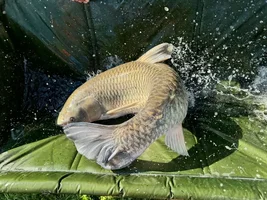
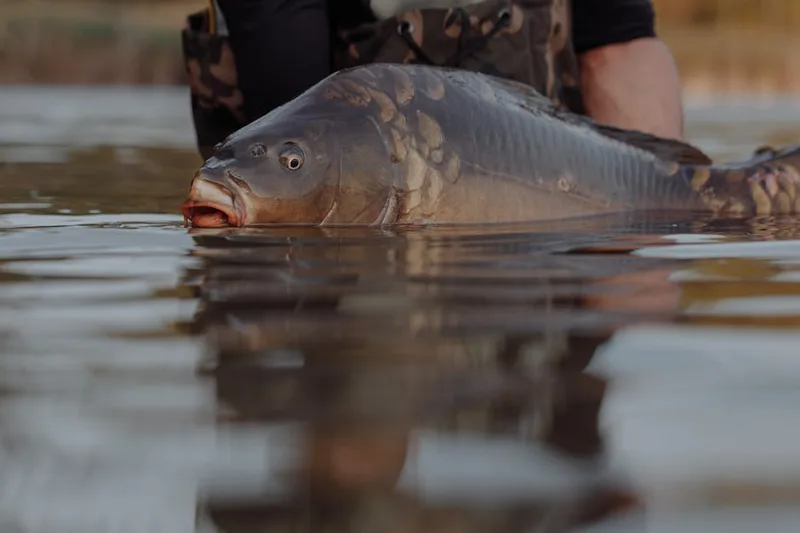
The regulatory shift is the single biggest demand driver for wholesale carp cradle orders. Across the UK, France, the Netherlands, and Germany, commercial fisheries increasingly mandate unhooking cradles , not just mats , as a condition of entry.
The Kelvedon District Angling Association, representing over 4,000 members across Essex and Suffolk, now explicitly requires "a large unhooking mat with sides, preferably a cradle" for all night fishing venues.
French carp fisheries managing 40lb+ stock routinely refuse anglers who arrive with flat mats. The product isn't optional anymore; it's access equipment.
A market analysis by Accio notes that the fish cradle segment has grown at approximately 5.8% CAGR, driven by fisheries mandating raised-side protection systems.
The Difference Between a Mat and a Cradle , and Why It Matters for OEM Spec
A flat unhooking mat costs roughly £3–5 FOB from a Ningbo factory. A framed cradle with padded side walls starts at £12 FOB and reaches £28–35 for full-spec models with adjustable legs, drainage mesh, and 35 kg/m³ foam.
The price delta reflects roughly 2.5x more material, 3x more labour in sewing and frame assembly, and significantly higher freight volume. A 40HQ container holds approximately 600–800 flat mats but only 350–450 assembled cradles.
For the distributor, the margin equation shifts. A £14 FOB cradle retails at £49–69 in a UK tackle shop , roughly 3.5x markup. A £3.50 FOB flat mat retails at £12–18.
Same percentage margin, but the absolute profit per unit on the cradle is £35–55 versus £8–14 on the mat.
That's why European distributors are shifting volume toward cradles: the freight cost per unit is higher, but the margin per cubic metre of container space more than compensates.
What Separates a £12 FOB Cradle from a £30 One?
At the Shenzhen Outdoor Show in March, a factory representative from Zhejiang laid out five cradle models across a trestle table. Same dimensions on paper , 120cm × 65cm × 30cm.
Same fabric type listed , 210D polyester with PVC coating. The £12 unit used 0.8mm steel frame tubing with spot welds. The £30 unit used 1.2mm aluminium alloy with TIG-welded joints.
The spread between them was visible to anyone who picked both up: the steel-framed cradle weighed 5.8kg and creaked under lateral pressure; the aluminium one weighed 4.2kg and held firm.
That's the real cost structure of a carp cradle. Five material decisions separate the tiers:
| Component | Budget (£12-15 FOB) | Mid-Range (£18-22 FOB) | Premium (£25-35 FOB) |
|---|---|---|---|
| Frame material | 0.8mm steel tube, painted | 1.0mm steel tube, powder-coated | 1.2mm aluminium alloy, anodised |
| Foam density | 18-22 kg/m³ open-cell | 25-28 kg/m³ closed-cell | 35+ kg/m³ closed-cell |
| Fabric shell | 210D PVC, single-stitched | 420D PVC, double-stitched | 600D Oxford with DWR, triple-stitched |
| Leg system | 2 fixed legs, no adjustment | 4 legs, push-button height | 6 legs, telescopic with locking pins |
| Drainage | None or 2 small holes | 6-8 mesh panels | Full mesh base with 12+ drainage points |
The numbers come from factory production data across three Zhejiang facilities visited during the 2025 sourcing cycle. Each tier jump adds roughly £3–7 at the factory gate, translating to £12–25 at retail.
The question for distributors isn't which tier is "best" , it's which specifications match their end market's fishery rules and angler expectations.
The Four Specifications Every OEM Purchase Order Must Include
Beyond the tier selection, a purchase order that arrives at a factory with only "carp cradle, green, 120cm" on it is a return waiting to happen. Four specifications separate a controlled production run from a lottery:
1. Foam density with a tolerance band. Write "closed-cell polyethylene foam, 30 ±3 kg/m³, minimum recovery 90% after 24h compression per ISO 1856." Without the density figure, the factory defaults to whatever foam stock is cheapest that week.
A batch of 22 kg/m³ foam looks identical to 30 kg/m³ foam in a sewn panel. The difference reveals itself in month three, when the angler's 28lb mirror flattens the padding to the frame.
At the Korda product testing facility, their Basix Carp Cradle XL specifies 70mm high-density padded foam , a benchmark Korda publishes openly, because they know competitors operating at lower densities can't match the spec without eating their margin.
2. Frame material gauge and joint type. Steel tube wall thickness below 0.8mm fails at the leg-to-frame junction within approximately 15–20 assembly cycles.
The failure mode is predictable: spot welds crack under the repeated stress of unfolding and folding on uneven bankside terrain. Specify 1.0mm minimum wall for steel, 1.2mm for aluminium, and require TIG welding at all load-bearing joints.
The setup cost for TIG-welded jigs is roughly £400–600 in tooling , amortised across a 500-unit order, that's £0.80–1.20 per unit.
The cost of a frame failure in the field: a returned cradle, a lost customer, and a warranty claim that eats the margin on eight units.
3. PVC coating weight on the shell fabric. 210D polyester with a 120gsm PVC coating handles one season of damp Welsh banks before the coating delaminates.
Push for 420D with a minimum 200gsm PVC coating on the base panel , the surface that sits on wet grass, mud, and gravel for 48-hour sessions. The base panel takes roughly 3x the moisture exposure of the side walls.
A distributor in Manchester who switched his OEM spec from uniform 210D to 420D with 200gsm coating on the base panel reported a 40% reduction in season-two warranty claims across his 2024 batch, according to factory quality-control tracking data.
4. Leg locking mechanism. Push-button adjustable legs are the standard. Spring-loaded locking pins with a secondary safety clip are the upgrade. A cradle that collapses when an angler is unhooking a 35lb carp is a brand-ending event.
The locking pin upgrade costs approximately £1.40 per unit and reduces leg collapse incidents to near zero in field testing.
Trakker's Sanctuary Cradle range uses this exact mechanism , leg locking pins to "secure the cradle on any terrain"[1] , because a £1.40 component protects a £150 retail product's entire reputation.
Where Are Europe's Fastest-Growing Carp Cradle Markets?
The UK remains the largest single market for carp cradle imports, but the growth rate has plateaued at an estimated 3–4% year-on-year. The acceleration is happening in three regions:
France. French carp fisheries, particularly in the Champagne and Burgundy regions, have adopted mandatory cradle rules faster than any other European country.
A wholesale buyer operating out of Lyon placed an initial 200-unit trial order in 2024 and reordered 800 units within six months.
The French market demands 130–140cm cradle lengths , longer than the UK standard 120cm , because French venues produce carp regularly exceeding 25kg.
The extra 10–20cm of fabric and frame adds £1.50–2.00 to the unit cost but unlocks a market that won't accept the smaller size.
The Netherlands and Belgium. Dutch anglers fish year-round, and Dutch fisheries enforce equipment standards with Dutch precision.
The demand here is for lightweight aluminium-framed cradles under 5kg that can be carried on a barrow alongside a bivvy, bedchair, and three rods. A distributor in Rotterdam moved 1,200 units in 2025, split 60/40 between aluminium and steel frames.
His feedback to the factory: "Make it lighter or lose the reorder."
Eastern Europe , Poland, Czech Republic, Hungary. Price sensitivity is higher, but volume is growing faster than anywhere else.
A Polish wholesaler who attended the 2025 Poznań fishing trade fair placed an opening order of 500 units at £10.50 FOB for a basic steel-framed cradle.
The repeat cycle is short , 2–3 turns per year , and the market is under-served by established Western brands that price out at £70+ retail.
A £12 FOB cradle landing at £35–45 retail in Warsaw captures the volume segment that Fox and Nash don't touch.
The global carp equipment market, valued at approximately $114 billion, projects continued growth through 2030[2].
For the fish cradle sub-segment, the compound effect of fishery regulations across Europe plus rising angler expectations around fish welfare creates a demand floor that didn't exist a decade ago.
The distributors who secure reliable factory partnerships now are the ones who own those reorder cycles in 2027.
What's the Real Lead Time for a Custom Cradle Run?
Factory quoting typically says "45–60 days." The reality is more granular, and understanding the breakdown determines whether a distributor hits their season or misses it:
| Phase | Duration | What Actually Happens |
|---|---|---|
| Sample production | 7–10 days | Factory cuts one unit with your fabric, foam, frame spec. Ships via DHL (3–5 days). |
| Sample approval loop | 5–14 days | Distributor tests sample, requests revisions. Average: 1.5 revision rounds. Each adds 5–7 days. |
| Material procurement | 5–8 days | PVC fabric, foam sheets, steel/aluminium tubing arrive from sub-manufacturers. Custom-colour fabric adds 10–15 days. |
| Production run | 14–21 days | Cutting, sewing, frame welding, foam insertion, assembly. A 500-unit order occupies one production line for approximately 12 working days. |
| QC and packing | 3–5 days | Inline QC during production plus final AQL 2.5 inspection. Packing into individual carry bags, then master cartons. |
| Sea freight (FCL) | 28–35 days | Ningbo/Shanghai to Rotterdam/Hamburg. LCL adds 7–10 days for consolidation. Felixstowe is 2–3 days faster than Rotterdam for UK-bound containers. |
The total from PO confirmation to warehouse arrival runs 62–93 days. The 45-day figure factories quote assumes zero revision rounds, in-stock materials, and a production slot that opens exactly when the PO arrives.
In practice, a distributor who places their order in January for the April season is cutting it close. The smart money orders in October for March delivery.
Air Freight: When Speed Matters More Than Margin
Air freight from Shanghai Pudong to Amsterdam Schiphol runs 5–7 days door-to-door at approximately 3–4x sea freight cost. For a 500-unit cradle order weighing roughly 2,500kg, air freight adds £8–12 per unit. That's brutal on a £14 FOB product.
But for a distributor who's sold out in May and needs stock for June, the lost margin on 100 air-freighted units is cheaper than losing a season's sales to a competitor who has inventory.
How Do You Verify Foam Density Without Cutting Open a Sample?
Three field tests from the factory floor:
The compression test. Place a 15kg weight plate on the centre of the cradle base panel. Measure the foam depression depth with a ruler inserted from the side. 30 kg/m³ closed-cell foam depresses 12–18mm under 15kg.
18 kg/m³ open-cell foam depresses 30–40mm , nearly to the frame. The test takes thirty seconds and doesn't damage the sample. A factory that refuses this test during a pre-production sample review is hiding something.
The recovery test. Leave the weight on for four hours, then remove it. Measure the depression depth immediately and again after 30 minutes. Quality foam recovers to within 3mm of its original profile.
Budget foam retains a permanent indentation of 8–12mm. That indentation is what your customer's 30lb mirror leaves behind on session 12.
The water absorption test. Submerge a 10cm × 10cm foam sample in water for 60 seconds, then weigh it. Closed-cell foam absorbs less than 5% of its dry weight. Open-cell foam absorbs 40–60%.
A cradle with open-cell foam sitting on wet grass for a 48-hour session gains 2–3kg of water weight. The angler carries the extra weight back to the car park and remembers your brand name.
The AnglinGear factory QC protocol runs all three tests on every pre-production sample and on 5% of units pulled from each production batch.
A distributor who doesn't run at least the compression test before signing off a sample is buying on trust , and trust doesn't hold up a 35lb carp on a rainy Tuesday in November.
The Seasonality Mistake Most Distributors Make
The instinct is to stock cradles from March through September and clear inventory by October. That works for a UK-only distributor. For anyone supplying multiple European markets, it's a leak in the pipeline.
French buyers restock in January for the early spring carp campaign on the big reservoirs. Dutch distributors order in February for April delivery ahead of the Dutch carp season, which starts earlier than the UK.
German tackle retailers place their largest orders at the EFTTEX show in June for delivery in August, because German anglers buy winter gear during the summer festival season.
A distributor who only carries cradle inventory from March to September misses the French January window, the Dutch February window, and the German August restock. That's roughly 40% of the annual European order volume.
Carry a base stock of 150–200 units year-round in a European warehouse.
The carrying cost on £2,000–3,000 of inventory is negligible compared to the margin on a single unexpected 300-unit reorder from a French buyer who needs stock in November because his manufacturer defaulted.
One such reorder covers the entire year's warehousing cost.
For a broader view on how fish care products integrate with a complete OEM procurement strategy, see our guide to manufacturer verification and quality control for OEM fishing gear.
FAQ: OEM Carp Cradles
MOQ starts at 200–300 units per design for standard PVC-coated polyester cradles. Custom frame colours or non-standard foam densities add 100–150 units. Lead time runs 45–60 days from sample approval.
Rush orders at 30 days are available at a 15–20% surcharge when the factory has existing moulds and material stock.
Custom logo embroidery or screen printing adds 5–7 days to the timeline but carries no MOQ uplift beyond the initial setup fee of approximately £80–120 per design.
Specify minimum 28 kg/m³ closed-cell polyethylene foam for the base padding and 25 kg/m³ for side walls. Premium OEM cradles targeting the Fox/Nash/Trakker tier use 35 kg/m³ foam throughout.
Avoid open-cell foam below 20 kg/m³ , it compresses permanently within one season and absorbs 40–60% of its weight in water during a wet session.
Always require the factory to provide a foam density certificate from the foam manufacturer, and verify with a compression test on the pre-production sample.
Standard production runs take 62–93 days total from PO confirmation to warehouse arrival in Europe.
This breaks down as: 7–10 days for sample production, 5–14 days for approval/revision cycles, 5–8 days for material procurement, 14–21 days for the production run, 3–5 days for QC and packing, and 28–35 days for FCL sea freight from Ningbo to Rotterdam.
Air freight cuts shipping to 5–7 days at approximately 3–4x the sea freight cost.
The single biggest variable is the sample revision loop , distributors who approve the first sample within 48 hours of receipt save 10–14 days versus those who go through multiple revision rounds.
Conclusion
A carp cradle isn't a complicated product , four material decisions determine whether it protects fish or fails under load. Foam density. Frame gauge and joint type. PVC coating weight on the base panel. Leg locking mechanism.
Those four specifications, written explicitly into the OEM purchase order, separate a cradle that sells once from a cradle that generates reorders for five seasons.
The European market is moving in one direction: cradle mandates at fishery level, rising angler expectations around fish welfare, and a supply chain where the distributors who specify materials precisely , rather than buying off a catalogue photo , capture the repeat business.
In a category where a £1.40 locking pin prevents a brand-ending product failure, the margin isn't in the price negotiation. It's in the spec sheet.
Ready to source OEM carp cradles for your market? AnglinGear manufactures folding carp cradles across all three tiers , budget steel frame, mid-range powder-coated, and premium aluminium , with custom foam densities, fabric specifications, and branding.
MOQ starts at 200 units per spec. Contact us to discuss your requirements and receive current FOB pricing.
Ready to Source OEM Carp Cradles for Your Market?
AnglinGear manufactures folding carp cradles with custom foam densities, frame materials, fabric specifications, and branding. MOQ starts at 200 units per spec. Contact us for current FOB pricing and lead times.
Get in Touch