What Happens on the Packing Floor Decides Your Margin
Three weeks ago I stood at bay four on the packing floor. The crew was loading a 40HQ for a distributor in Hamburg , aluminium fishing chairs, three colours, two frame variants.
The supervisor looked up from his clipboard and said the thing nobody tells you when they quote a unit price.
"This one's tight. We hit 92% volume. Next order they want armrests on all units, we lose 80 chairs per container."
That's the conversation that matters. You ask for FOB unit price because it's the number on the quote sheet. But the number that actually lands in your warehouse per euro , that number lives or dies in how a container gets packed.
I've watched distributors celebrate a €2.50 saving per chair on an order of 800 units, then lose it all because the boxes were 6cm taller than they needed to be. 74 fewer chairs in that container. That €2,000 saving vanished into thin air , literally, into air space above pallets.
This article is not theory. It's what I see on the floor every week when containers go out to Rotterdam, Felixstowe, and Gdansk.
The Container Math: 20ft vs 40HQ
Let's start with the numbers that actually matter. Not theoretical maximums. What lands in port.
| Chair Type | Typical Box (L×W×H cm) | Units per 20ft | Units per 40HQ | Per-Unit Freight Saving (40HQ vs 20ft) |
|---|---|---|---|---|
| Compact Aluminium (fold-flat) | 54×15×65 | 480-520 | 1,100-1,200 | ~38% lower |
| Steel Frame Chair | 56×18×68 | 380-420 | 850-950 | ~35% lower |
| Deluxe Chair (with armrests) | 58×20×70 | 340-380 | 780-880 | ~33% lower |
| Chair + Accessory Mix | Mixed boxes | 300-350 (est.) | 700-800 (est.) | Varies by box uniformity |
These numbers come from actual shipments, not packing calculators. Box dimensions above are for 600D Oxford padded aluminium chairs with mud feet , the standard European market spec. Our FF-CR-01 model packs at the higher end of the aluminium range because the fold-flat design nests tighter.
One thing to notice: the jump from 20ft to 40HQ doesn't just double. It's closer to 2.3× the capacity, because the 40HQ's extra 30cm of internal height lets you stack one more row of chair boxes.
And the per-unit ocean freight on a 40HQ is significantly cheaper than running two 20ft containers. If you can fill it, a 40HQ is almost always the right choice.
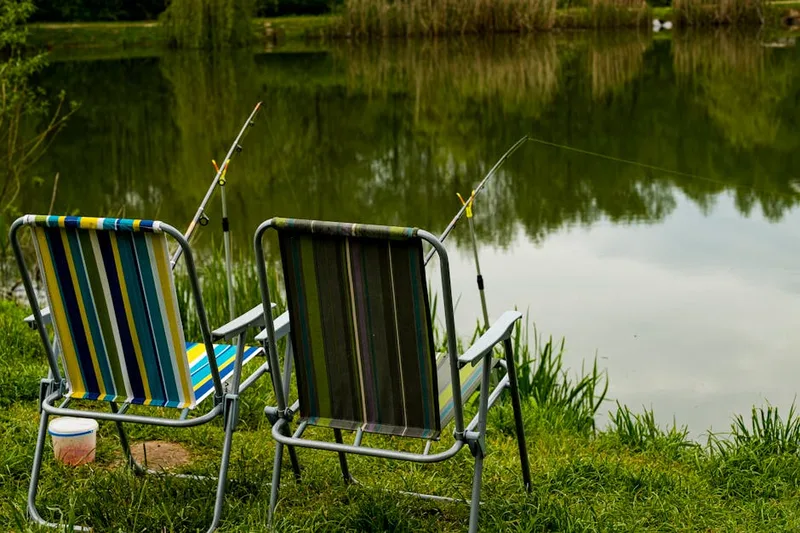
FOB Pricing Tiers: Why Volume Changes the Factory Quote
Here's what happens inside the factory when you scale an order. It's not just about amortising setup cost , the production line itself runs differently.
At 200-300 units (a half 20ft), the factory runs your order alongside other jobs. The cutting table switches between fabrics. Welders change jigs. Every switch costs 15-20 minutes of downtime that gets spread across all the orders in that batch. Your per-unit labour cost reflects this.
At 500+ units (a full 20ft), the line runs dedicated for roughly two shifts. Tooling stays set. The foam cutting station doesn't recalibrate between orders. You're now in the "production run" pricing tier, not the "batch job" tier.
At 1,000+ units (a 40HQ), three things change at once: the factory buys raw materials in bulk , 6061 aluminium tube by the tonne instead of by the bundle, 600D Oxford fabric by the roll instead of by the metre.
Labour runs at full efficiency. And the factory is more flexible on payment terms because the order size justifies it.
In our production testing, the FOB unit cost drops roughly 18-25% from a 300-unit order to a 1,100-unit order. The exact number depends on the chair spec, but the pattern holds. Volume buys efficiency that individual negotiation cannot match.
Mixed SKU Strategy: How to Fill a Container Without Overstocking One Model
European distributors rarely buy one SKU per container. The practical question is how to mix without destroying packing density.
The golden rule: match box heights. If your A-model box is 65cm tall and your B-model box is 68cm, you stack them in the same row , the 3cm gap costs you nothing because you can't fill it anyway.
But if one model is 65cm and another is 82cm, you're creating air pockets on every layer. That's where the 74-lost-chairs scenario comes from.
A typical working mix we see from European distributors:
- 60-70% volume SKU , the aluminium frame compact chair, your margin driver. Think FF-CR-01 spec: 6061 frame, 600D Oxford, mud feet.
- 20-30% premium model , steel frame or deluxe with armrests, higher retail price point. The fleece-lined feeder chair fills this slot well because its box dimension is within 3cm of the compact model.
- 5-10% accessories , spare mud feet, carry bags, repair kits. These slip into gaps between chair boxes and add margin without stealing volume.
The worst packing mistake I see: mixing a bedchair into a chair container. Bedchair boxes are 30-40% larger in every dimension. One bedchair pallet disrupts three layers of chair stacking. If you need bedchairs, give them their own container or negotiate LCL for a small batch.
Freight Timing: The Seasonal Trap
Container freight rates move in predictable cycles if you've been watching long enough. European carp fishing retail peaks March through August. That means:
- September-October: Freight rates dip. Chinese factories are between peak seasons. This is when you want your container on the water , lower rates, shorter booking windows, more slot availability on vessels to Northern Europe.
- January-February: Chinese New Year creates a two-week production shutdown. Factories rush orders before the holiday, freight rates spike 20-40% on the spot market. Book your container before December or wait until March.
- May-July: Peak season surcharges kick in. Everybody wants their stock in European warehouses before the summer. Rates climb. If your container leaves Ningbo in June, you're paying the premium.
Here's the pattern we see repeatedly: a distributor places a repeat order right before Chinese New Year. Production finishes mid-February, but the container sits until early March because vessels are overbooked. The chairs arrive in April, missing the March retail stocking window by four weeks.
The chairs arrived in April , missing the March retail stocking window by four weeks. The lost margin on those four weeks was larger than the FOB price negotiation they spent three weeks on.
Timing beats price. Every time.
Three Numbers the Quote Sheet Doesn't Show
- Carton engineering. A chair box that survives a 40HQ stack from Ningbo to Rotterdam without crushing the bottom layer , that requires double-wall corrugated cardboard, roughly €0.30-0.50 more per box than single-wall. Skip it and you'll open the container door to 40 flattened bottom-row boxes. We learned this in 2019 with a shipment to Gdansk. Never again.
- Pallet vs floor loading. Palletised loading adds roughly 8-10% to freight cost because pallets eat height. But floor-loaded containers require manual unloading at the destination warehouse , typically 3-4 workers for 3-4 hours. Compare your warehouse labour cost to the pallet surcharge before deciding.
- Customs classification. Fishing chairs fall under HS code 9401.79 (seats with metal frames). The duty rate in the EU is 0% for this category. But if your shipment includes chairs with built-in electronics , heated seats, LED fittings , it moves to a different code with a 2.7% rate. Label your commercial invoice correctly.
What the Market Looks Like Right Now
The European fishing chair import market has shifted in two ways over the past eighteen months.
First, more distributors are moving from spot buying to framework agreements with two or three factories , they commit to 3-4 containers per year in exchange for locked FOB prices and guaranteed production slots.
This is smart procurement and it's becoming the norm.
Second, the aluminium premium has narrowed. Five years ago a 6061 aluminium chair cost roughly 60% more than the equivalent steel model at FOB.
Today that gap is closer to 35-40%, because aluminium tube pricing has stabilised while steel tariffs have pushed steel costs up. If you've been defaulting to steel chairs for price reasons, it's worth re-running the numbers.
For a deeper dive on the cost breakdown of different chair materials and specs, see our wholesale cost breakdown guide.
Pre-Shipment Checklist: What to Confirm Before the Container Leaves
| Checkpoint | What to Ask the Factory | Why It Matters |
|---|---|---|
| Box dimensions confirmed | Send me the actual carton spec, not the product dimensions | 3cm error on box height = 60-80 fewer chairs per 40HQ |
| Carton strength | Show me your ISTA 3A or equivalent drop test report | Bottom-layer crush = write-off of 10-15% of container value |
| Loading plan | Send me the 3D loading diagram before the container is packed | Visual catch for box size mismatches and wasted volume |
| FOB Incoterms clarity | Confirm exactly what's included: loading, export clearance, terminal handling | Surprise costs at port of loading erode your margin before the ship sails |
| Bill of Lading accuracy | Verify consignee details, HS code, and gross weight before release | B/L errors delay customs clearance by 3-7 days |
The Only Number That Matters
I'll end where I started: on the packing floor. The number on the quote sheet is a starting point. The number that matters is total landed cost per sellable unit in your warehouse.
That number includes FOB price, ocean freight, insurance, duty (zero for most fishing chairs, but check your HS code), destination handling, and , most overlooked , the cost of the units you couldn't fit because the boxes weren't right.
If you're sourcing fishing chairs for your distribution business and want to talk real numbers , not brochure numbers , we do that conversation every day. Bring your target retail price point and your annual volume estimate. We'll work backwards to find the container strategy that makes sense.
Sources & Industry References
- EU TARIC , Customs Tariff Database , Official HS code classification and duty rates for fishing chair imports into the European Union
- Internal factory packing data from 40HQ shipments to Rotterdam, Felixstowe, and Gdansk (2024-2026)
- Freight rate cycle observations from Ningbo Port to Northern Europe basic ports (2024-2026)
Frequently Asked Questions
A 40HQ container typically holds 1,000-1,200 carp fishing chairs depending on the model. Compact aluminium chairs with fold-flat design pack at roughly 1,100-1,200 units. Steel frame chairs with higher profile boxes run 850-950 per 40HQ. Armrests and accessory brackets reduce density by 8-12% because they prevent tight nesting.
FOB unit price drops 18-25% when scaling from a 20ft order to a full 40HQ. A 20ft load of 400-500 chairs carries higher per-unit factory overhead.
At 1,000+ units in a 40HQ, production line setup costs spread thinner and the factory runs dedicated tooling. Per-unit freight cost also drops significantly with the larger container.
Yes, and most European distributors do. A typical mixed load is 60-70% volume SKU, 20-30% premium model, and 5-10% accessories.
The key constraint is box size mismatch , if SKU A has a box 15cm taller than SKU B, you lose packing efficiency. Best practice: group models with similar carton dimensions.
September to October offers the best freight rates , factories are between peak seasons and vessel space is more available. Avoid January through mid-February due to Chinese New Year production shutdowns and associated freight rate spikes. May through July is peak season with highest rates.
Ready to Run the Real Numbers on Your Next Container?
Bring your annual volume estimate and target retail price point. We'll work backwards to a container strategy that makes sense , no brochure numbers, just packing-floor math.
Request a Container Quote(Container pricing and freight data updated June 2026. Contact us for current spot rates to your destination port.)