Author's Note: This guide comes from the factory floor.
Every specification and failure mode described here is based on production testing, warranty return data, and conversations with European distributors who have placed orders ranging from 200 to 5,000 units.
It is not a retail buying guide. It is a procurement decision framework.
The Reality Check: Two Products, One Supply Chain Decision
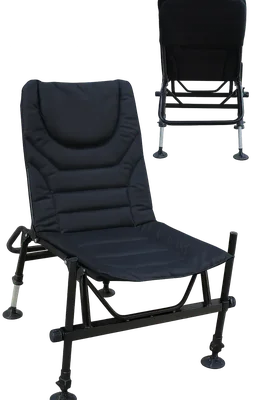
Last month, a German distributor walked into our workshop with a spreadsheet. His problem was not finding manufacturers.
His problem was that every manufacturer's catalogue looked the same , 600D Oxford fabric, 6061 aluminium frame, "ergonomic design." He needed to know which of twenty identical-looking products would still be in service three seasons later.
This is the gap between a product specification sheet and a procurement decision. A spec sheet tells you what a product is made of. A procurement framework tells you whether those materials were chosen for durability or for cost reduction.
Most B2B buyers do not need another list of chair models. They need a way to read between the lines of a factory quotation.
Specifically, that 1.0mm wall thickness on a bedchair leg means a 12-month warranty claim rate of roughly 8%, while 1.2mm drops it below 2%.
This guide covers the three categories that form the bank-side seating and sleeping ecosystem: fishing chairs (upright, compact, for day sessions), bedchairs (flat, padded, for overnight use), and sleep systems (sleeping bags and mattresses rated for multi-season bankside conditions).
The Product Spectrum: Where Your Margin Lives
Distributors who treat chairs, bedchairs, and sleeping bags as separate procurement decisions leave margin on the table. These three categories share supply chains, material manufacturers, and manufacturing processes.
A factory that welds a 6061 chair frame also welds a bedchair frame. The foam manufacturer for your chair seat pad is the same one quoting your bedchair mattress.
Bundle procurement across these categories typically unlocks a 5-8% unit cost reduction at factory gate. Here is what the spectrum looks like in procurement terms:
| Category | Typical FOB Unit Cost | Standard MOQ | Key Specification Lever |
|---|---|---|---|
| Fishing Chair (Alu) | $18-28 | 200-300 units | Frame wall thickness, weld quality |
| Fishing Chair (Steel) | $12-18 | 200-300 units | Powder coat thickness, tube diameter |
| Bedchair (6-leg) | $35-55 | 200-500 units | Foam density, hinge mechanism design |
| Sleeping Bag (5-season) | $25-40 | 300-500 units | Fill type and density, outer shell fabric |
These are factory-gate ranges for standard OEM orders in 2026. Custom colours, branded embroidery, and bespoke packaging add $2-5 per unit depending on complexity.
Materials Deep Dive: The Specs That Separate Three Seasons from Five
Aluminium Frames: 6061 vs 7005
6061 aluminium is the industry workhorse for fishing chairs. It welds cleanly, resists corrosion without post-weld heat treatment, and handles static loads up to 130 kg at 1.2mm wall thickness.
For reference, our Pro Feeder Chair uses a 6061 frame with precisely this specification.
7005 aluminium offers roughly 15% higher tensile strength. The trade-off: it costs 20-25% more at factory gate and requires more skilled welding.
I have seen exactly two scenarios where 7005 justifies its premium: chairs with a target weight below 3.2 kg, and bedchairs designed for anglers exceeding 140 kg.
For everything else, 6061 at 1.2mm minimum wall thickness is the procurement sweet spot.
Foam Density: The Invisible Differentiator
This is where I see distributors make the costliest mistake. They compare bedchair prices without specifying foam density in the purchase order, and then discover why their £39 retail bedchair generates warranty claims while the competitor's £49 model does not.
Here is the data from our production testing:
- 28-32 kg/m³ foam: rebounds in approximately 3 seconds, maintains shape through 200+ nights of use, retains 85% of original thickness after 12 months
- 22-26 kg/m³ foam: adequate for chairs used 4-6 hours at a time, shows visible compression after one season of weekly use
- Below 22 kg/m³: permanently compresses after roughly 50 hours of use. This is the foam that generates return requests by month six
The cost difference between 22 kg/m³ and 30 kg/m³ foam on a bedchair mattress: approximately £1.20 per unit at factory gate. The warranty claim cost from a single returned bedchair: approximately £15 in processing, shipping, and replacement. Do the math.
Sleeping Bag Fill: Hollow-Fibre vs Solid Polyester
For a 5-season sleeping bag rated to -5°C, specify hollow-fibre polyester fill with silicone treatment. Hollow fibres trap more air per gram than solid polyester: roughly 30% more thermal retention for the same fill weight.
Silicone treatment prevents the fibres from clumping after compression, which is the dominant failure mode for sleeping bags after 30-40 nights of use.
Our all-season sleep systems use precisely this fill specification across the full range, from 3-season through 5-season ratings.
Common Failure Modes: What Warranty Returns Teach You
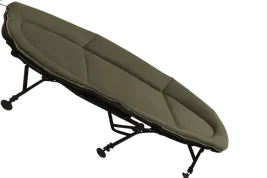
I have reviewed warranty return data across thousands of units shipped to European distributors. The patterns are consistent and avoidable:
Chair Frame Weld Failure
The number one chair warranty claim, accounting for roughly 60% of all returns, is a cracked weld at the leg-to-seat junction. Root cause: single-sided welding to reduce production time.
A proper double-sided weld adds roughly 90 seconds per chair in production. The alternative is a 6-8% return rate within 18 months.
Specify double-sided welding in your OEM purchase order. Confirm with pre-production sample inspection. This single line item on your spec sheet eliminates the majority of your warranty exposure.
Bedchair Hinge Mechanism Wear
The folding hinge on a 6-leg bedchair cycles through open-close roughly 40-60 times per season for an active angler. After 120 cycles, a hinge with a 1.0mm pivot pin shows visible lateral play.
After 200 cycles, the bedchair no longer locks flat, which means the angler sleeps on a subtle slope, which means they do not buy your brand again.
Specify 1.5mm minimum pivot pin diameter and request a cycle-test report from the factory. A hinge that survives 500 cycles without lateral play is a hinge that survives five seasons of real-world use.
Sleeping Bag Zip Degradation
The second most common sleeping bag return after fill compression failure. A no-name nylon coil zip lasts roughly 80-100 open-close cycles before the slider starts catching. A YKK or equivalent branded zip with anti-snag tape lasts 300+ cycles.
The cost difference: approximately $0.80 per zip at factory gate. The difference in perceived product quality: the moment a customer's zip snags at 2am on a freezing bank, your brand reputation takes a hit no marketing budget can fix.
Detailed inspection protocols matter here as much as specifications. For a full framework on factory quality control, see our carp fishing gear quality control guide.
The Five-Point Procurement Checklist
When I sit across the table from a distributor reviewing their first OEM order, here are the five questions I make sure they have answers to before signing:
| Checkpoint | Ask the Factory | Acceptable Answer |
|---|---|---|
| 1. Frame Wall Thickness | What is the minimum tube wall thickness on frame components? | 1.2mm minimum for aluminium chairs; 1.0mm minimum for steel |
| 2. Weld Method | Are frame welds single-sided or double-sided? | Double-sided on all load-bearing joints; factory should provide weld penetration test data |
| 3. Foam Specification | What is the foam density in kg/m³ for all padded components? | 28-32 kg/m³ for bedchair mattresses; 22-26 kg/m³ minimum for chair seat pads |
| 4. Zip Brand | What brand and specification of zips are used on sleeping bags and carry bags? | YKK or equivalent branded zip with anti-snag tape; cycle-test report available |
| 5. Powder Coat / Finish | What is the coating thickness and salt-spray test rating? | Minimum 40 microns powder coat thickness; 48-hour salt spray test pass for steel frames |
These five data points, specified in writing and verified on pre-production samples, eliminate roughly 80% of the warranty exposure a typical distributor carries on their first container order.
Market Trends Reshaping Procurement in 2026
Three shifts are changing what European distributors need from their supply chain:
5-Season Rating Is the New Baseline. Five years ago, a 3-season sleeping bag covered 80% of the European carp fishing calendar.
Today, with anglers chasing year-round sessions and winter carp fishing growing 15-20% annually in the UK and Germany, a 5-season rating is no longer a premium upsell.
It is the default specification for any serious sleep system product line. Our 5-season sleeping bag range reflects this shift in procurement demand.
Lightweight Without Sacrifice. The "hike-to-the-peg" segment is growing. Distributors need chairs under 3.5 kg and bedchairs under 8 kg, without reducing frame wall thickness or foam density.
This requires 6061 aluminium with structural triangulation, not thinner tubes. Factories that understand this engineering trade-off are identifiable by asking one question: "Show me how you reduced weight without reducing wall thickness."
Sustainability Documentation Is a Procurement Gate. Within the next 18-24 months, European distributors without recycled aluminium content data and factory audit reports will lose shelf space to those who have them.
REACH compliance was the entry ticket of the 2010s. Carbon footprint disclosure is the entry ticket of the late 2020s. Ask for material traceability documentation during your first inquiry, not after the order.
Conclusion: The Spec Sheet Is Not the Decision
A procurement decision for fishing chairs and sleep systems comes down to one question: does the factory understand the relationship between specification choices and warranty outcomes?
A factory that recommends 1.0mm wall thickness to save $0.60 per unit understands cost. A factory that tells you the 1.0mm wall thickness will generate an 8% warranty return rate within 18 months understands procurement.
Choose the second one.
Related Products for Your Procurement Portfolio
Ready to Build Your Procurement Specification?
Tell us your target market, volume requirements, and quality benchmarks. We'll provide FOB pricing, lead times, and a technical specification package within one business day.
Request Quote & Spec Sheet(Specifications and pricing referenced in this guide reflect factory-gate data as of July 2026. Contact us for current quotations tailored to your order volume and customization requirements.)