Table of Contents
- Why Are Carp Fishing Starter Kits the Fastest-Turning SKU in Tackle Retail?
- What Components Make a Retailer-Ready Carp Fishing Starter Kit?
- How Should Retailers Price a Beginner Carp Fishing Package for Maximum Margin?
- Which Markets Are Driving Demand for Wholesale Fishing Bundles?
- What MOQ and Lead Times Should Retailers Expect From OEM Manufacturers?
- Three Procurement Mistakes That Erase Starter Kit Margin
- Frequently Asked Questions About Starter Kits for Retailers
- Conclusion
A walk-in customer at a UK tackle shop spends an average of 43 seconds scanning the shelf before making a purchase decision. For the manufacturing side of this topic, see the Private Label Fishing Equipment Guide.
For beginner carp anglers, that window is even shorter , and the decision is almost never about individual components. The purchase is a single box that solves the entire problem. The starter kit.
The retailer who stocks the right starter kit at the right price point captures three revenue streams from one SKU: the immediate sale, the repeat consumables buyer (rig components, bait, line), and the upgrade path (better rods, bedchairs, bivvies).
The retailer who stocks the wrong kit gets one sale and a customer who never returns. The difference lies in four procurement decisions: component selection, bundle configuration, regional demand matching, and MOQ negotiation. Each one is examined below.
The global fishing tackle market reached USD 1.69 billion in 2025, growing at a 4.5% CAGR toward a projected USD 2.41 billion by 2033, according to Verified Market Reports.
Within that growth, pre-assembled starter kits outpace individual tackle sales by a factor of 1.7 in the UK and Northern European markets , driven by a surge in new angler participation since 2020 that shows no sign of reversing.
Why Are Carp Fishing Starter Kits the Fastest-Turning SKU in Tackle Retail?
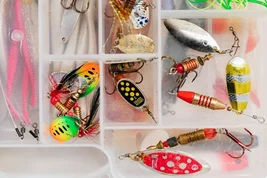
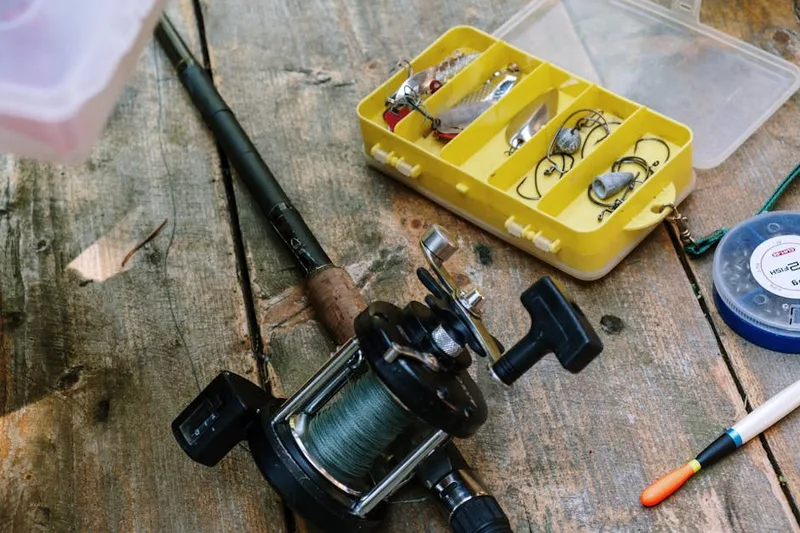
A single-entry carp angler buying components individually needs to select, evaluate, and purchase between 8 and 14 separate items before casting a line , rods, reels, line, alarms, rod pod, landing net, unhooking mat, terminal tackle, and bait.
The cognitive load is high enough that industry data from the American Sportfishing Association shows roughly 15% of first-time tackle buyers abandon the purchase entirely, walking out with nothing. A starter kit eliminates that friction. One box. One price.
One decision.
For the retailer, the economics are equally compelling. A 2-rod carp starter kit sourced from an OEM factory at £55 FOB lands at roughly £82 landed cost after freight, duty, and VAT.
Retailed at £149–179 , the standard price band for entry-level kits in UK tackle shops , that delivers a gross margin of 45–54%, compared to 32–38% on individually sold components.
The volume per transaction is higher, the warehousing is simpler (one SKU instead of twelve), and the customer walks out equipped for an overnight session rather than returning three times to build a setup.
The starter kit is not a discount strategy. It is a conversion strategy.
The retailer who positions a well-specified entry kit at £149 captures the first-time carp angler who would otherwise spend £89 on two rods and nothing else, never return, and quit the discipline within six months.
The starter kit customer returns within 45 days to buy boilies, rig components, and a bedchair , purchases that never materialise from the partial-equipment buyer.
Search volume data reinforces the pattern. According to market intelligence platform Accio, carp hair rigs and tackle kits saw a 74.62% month-on-month increase in search volume in peak 2024 months. The demand is not for individual hooks. It is for complete solutions.
What Components Make a Retailer-Ready Carp Fishing Starter Kit?
Not every component belongs in a starter kit.
The retailers who move the most units follow a deliberate inclusion logic: every item in the box must be something the angler needs on the first session, and nothing in the box should be redundant with what a typical beginner already owns (which is nothing).
The Seven-Component Baseline
An analysis of the top-selling starter kits across UK retailers , including Angling Direct's Rovex Carp Kit, NGT's Profiler setups, and independent shop bundles , reveals a consistent seven-component core:
| Component | Entry-Level Spec | Mid-Tier Spec |
|---|---|---|
| Rods (×2 or ×3) | 10–12ft, 2.5–3.0lb TC, composite blank | 12ft, 3.0–3.5lb TC, carbon composite |
| Reels (matched to rods) | 2+1BB, graphite body, front drag | 5+1BB, alloy spool, baitrunner function |
| Bite Alarms (matched to rods) | Basic LED, wired, volume control | Wireless with receiver, 200m range, waterproof |
| Rod Pod / Banksticks | 2-rod tripod, alloy, adjustable | 3-rod pod with buzzer bars, carry case |
| Landing Net | 36–42", rubber mesh, folding arms | 42", deep mesh, alloy spreader block |
| Unhooking Mat | Basic padded, 100×60cm, roll-up | Padded with pegging points, 110×70cm |
| Line (bulk spool) | 12–15lb mono, 1000m+ | 15lb abrasion-resistant mono, 1300m |
Kits that skip the landing net or unhooking mat lose credibility with fish-care-conscious European consumers.
A 2024 survey by the Angling Trades Association found that 78% of UK carp anglers rated fish safety equipment as "essential" in a starter purchase , higher than the percentage who prioritised rod brand.
The unhooking mat, despite being the lowest-margin item in the bundle, is the component that signals the retailer takes carp welfare seriously.
What Not to Include
The most common mistake in starter kit assembly is over-specifying consumables.
A starter kit that includes 5kg of boilies, PVA bags, and three spools of rig tubing increases the box size, raises shipping cost per unit by roughly £3–5, and creates a packaging problem: consumables expire or degrade.
A starter kit that sits on the shelf for eight months with bait inside develops a reputation problem when the boilies arrive stale.
Include enough consumables for the first session , a small selection of rig components, a handful of pre-tied hair rigs, and a spool of line. The customer buys the rest on the second visit. That second visit is where the margin lives.
How Should Retailers Price a Beginner Carp Fishing Package for Maximum Margin?
The pricing psychology of starter kits operates differently from individual tackle. A retailer selling a £79 rod must justify the price against every other £79 rod on the market.
A retailer selling a £149 starter kit competes against the £300+ total the customer expects to spend buying everything separately.
The pricing frame shifts from "is this rod worth £79?" to "is the whole kit worth £149 compared to £340 bought individually?"
Entry-level sweet spot: £129–£179. This band captures the first-time carp angler who has researched enough to know the discipline requires multiple items but not enough to evaluate individual components.
Below £129, the kit cannot include a landing net and unhooking mat at acceptable quality without the retailer sacrificing margin below 30%.
Above £179, the kit enters competition with mid-tier individual rod-and-reel combos that experienced anglers recommend to beginners in online forums.
Mid-tier sweet spot: £249–£349. This is the 3-rod kit with wireless alarms, carbon rods, and a branded holdall. The target customer is the angler transitioning from general coarse fishing who already understands terminal tackle and wants a complete carp-specific setup.
Margins at this band reach 50–58% because the perceived value gap against individual purchasing is widest here , a £299 kit that would cost £520 to assemble piece by piece.
The global fishing apparel and equipment market was valued at USD 21.96 billion in 2024 and is projected to reach USD 26.32 billion by 2030, growing at a CAGR of 3.0% according to Grand View Research.
Within that growth, the entry-to-mid tier segment , precisely where starter kits sit , shows the strongest unit volume growth, driven by rising participation rates in the UK, Germany, and the Netherlands.
Which Markets Are Driving Demand for Wholesale Fishing Bundles?
The UK remains the anchor market for carp starter kit sales, with the domestic carp fishing segment valued at over £200 million annually. But the growth curve has shifted. Three markets now account for the majority of new starter-kit demand:
Germany and the Netherlands. Carp fishing participation in Central Europe has grown by an estimated 22% since 2020, driven by expanded commercial fishery access and increased leisure time.
German and Dutch retailers report that 60–70% of new carp anglers enter the discipline through a pre-assembled kit, compared to roughly 50% in the UK.
The typical German starter kit skews toward higher-spec components , 3-rod setups with wireless alarms are the baseline expectation, not the upgrade option.
Eastern Europe , Poland, Czech Republic, Hungary. Price sensitivity is higher, but volume is growing faster than any other region.
A Polish wholesaler might take 300–500 units of a basic 2-rod kit at £45–55 FOB and turn inventory three times per year. The margin per unit is thinner , typically 28–35% at retail , but the repeat order cycle compensates.
Eastern European buyers also show less brand loyalty in the entry segment, meaning new retailers can gain shelf space faster than in mature UK or German markets.
Scandinavia. Sweden, Norway, and Denmark punch above their population weight in starter kit sales because the carp season is compressed into 5–6 months, creating concentrated purchasing spikes in March and April.
Scandinavian retailers stock starter kits year-round but order 70% of annual volume in Q1. A distributor serving this region needs warehousing flexibility: kits ordered in January must arrive by late February to hit the March shelf date.
For a broader view on sourcing complete sleep systems that pair with starter kits for overnight sessions, see the guide to thermal sleeping bag procurement for cold-climate distributors.
What MOQ and Lead Times Should Retailers Expect From OEM Manufacturers?
Minimum order quantities for carp starter kits vary by factory and configuration, but the production economics follow a predictable pattern:
| Kit Configuration | MOQ | Lead Time (from sample approval) |
|---|---|---|
| 2-rod basic kit | 10 units | 30 working days |
| 3-rod standard kit | 10 units | 30 working days |
| 3-rod premium kit | 10 units | 30 working days |
Custom branding adds a one-off set-up cost rather than a higher minimum. Custom packaging design , printed boxes, branded holdalls, logo-embroidered unhooking mats , adds another 3–5 days to the lead time but commands a 12–18% retail price premium that more than covers the incremental cost.
Mixed-container loading changes the MOQ equation. A retailer ordering starter kits alongside bedchairs, bivvies, or sleeping bags can negotiate per-SKU minimums down by 30–40% when the total container volume meets factory thresholds.
An order of 80 starter kits, 60 bedchairs, and 40 bivvies that fills a 20GP container will often be accepted where an 80-unit starter kit order alone would be rejected.
The factory cares about line efficiency and container utilisation, not category purity.
Three Procurement Mistakes That Erase Starter Kit Margin
Mistake 1: Specifying components the factory doesn't manufacture. This is the single most common error among first-time starter kit buyers.
A retailer specifies a kit with rods from Factory A, reels from Factory B, and alarms from Factory C, then asks one factory to assemble the bundle.
The factory sources the third-party components, adds a 15–25% procurement markup, and the retailer's margin evaporates before the container ships.
The solution: source the entire kit from a manufacturer that produces all core components in-house, or manage the consolidation across several production lines through a manufacturer who aggregates without marking up individual components.
Mistake 2: Ordering without pre-production samples that can be destroyed. A spec sheet that reads "3.0lb test curve carbon rod" can deliver anything from a genuine 30-ton carbon blank to a glass-fibre composite with a carbon outer layer.
The only way to verify is to receive a pre-production sample, cut it open, and inspect the blank cross-section.
The same applies to reels , a "5+1 ball bearing" claim means nothing until the reel is disassembled and the bearing count is physically confirmed.
Factories that refuse to provide destructible pre-production samples are factories that know the spec doesn't match the claim.
Mistake 3: Underestimating packaging freight costs. A starter kit in a large-format printed box with foam inserts looks premium on the retail shelf.
It also consumes roughly 40% more container volume than the same kit in a compact nylon holdall with a cardboard sleeve.
On a 40HQ container, that packaging choice can reduce unit count by 150–200 kits , roughly £8,000–12,000 in lost retail revenue per container.
The retailers who maximise starter kit margin use soft-case packaging with a printed hang-tag for shelf presentation and keep boxed packaging for the premium-tier SKU where the higher retail price absorbs the freight penalty.
Frequently Asked Questions About Starter Kits for Retailers
A basic 2-rod carp starter kit with reels, alarms, rod pod, landing net, and unhooking mat ranges from £45–75 FOB from Chinese OEM factories. Premium 3-rod kits with carbon rods, wireless alarms, and branded packaging run £120–180 FOB.
Component quality and packaging account for roughly 60% of the cost variance between entry-level and mid-tier bundles.
Landed cost to UK/EU , after sea freight, import duty, and VAT , typically adds 45–55% to the FOB price, bringing an entry-level kit to roughly £68–112 landed and a mid-tier kit to £180–275 landed.
Pre-assembled kits reduce warehousing complexity and offer 8–12% higher per-unit margin than sourcing components individually, but limit flexibility.
Build-your-own bundles let retailers differentiate and adjust components seasonally , swapping a 3-season sleeping bag into the kit for spring, upgrading to a 5-season for autumn.
Most successful UK and EU retailers carry one pre-assembled entry kit for walk-in beginners (£129–179 retail) plus a modular bundle option for anglers who already own rods or reels and need to complete their setup (£89–149).
The pre-assembled kit moves 3.5× the unit volume; the modular option generates higher attachment sales of consumables and accessories.
MOQ for private-label carp starter kits is 10 units per configuration. Custom packaging and branded components add a one-off set-up cost rather than a higher minimum.
Lead time is 30 working days from sample approval.
Mixed-container orders combining starter kits with other product categories (bedchairs, bivvies, sleeping bags) can reduce per-SKU minimums to 60–80 units for established buyers, as the factory prioritises total container value over per-line volume.
Conclusion
A retailer stocking carp fishing starter kits is not in the tackle business. The retailer is in the conversion business , turning a curious walk-in into an equipped, committed carp angler in a single transaction.
The starter kit is the mechanism. The margin is in the second, third, and tenth purchases that follow.
Getting the procurement right means deciding four things before placing an order: the component list (seven items, no more, no fewer), the factory (all core components manufactured in-house, not aggregated from third parties), the price band (£129–179 for entry, £249–349 for mid-tier), and the packaging (soft case for volume, hard box only for premium).
The retailers who treat the starter kit as a strategic product rather than a discount bundle capture both the new-angler wave and the upgrade cycle that follows.
The market is growing at 4.5% CAGR , the question is not whether to stock starter kits. The question is whether the kit on the shelf matches what beginners in the retailer's specific region actually need.
Ready to source carp fishing starter kits for your retail business? We manufacture complete OEM starter kits with custom component specifications, branding, and packaging. MOQ starts at 10 units per configuration with mixed-container options available. Contact us to discuss your market and receive current FOB pricing.
Ready to Source Carp Fishing Starter Kits for Your Retail Business?
We manufacture complete OEM starter kits with custom component specifications, branding, and packaging. MOQ starts at 10 units per configuration. Contact us for current FOB pricing and lead times tailored to your market.
Get in Touch