Table of Contents
- What Fill Weight Actually Determines Your Winter Sleeping Bag OEM Order?
- Hollow Fibre vs Microfibre: Which Filling Serves Your Wholesale Margin Better?
- The Three Specifications OEM Buyers Should Write Into Every Purchase Order
- Why Are Winter Sleeping Bag B2B Markets Shifting Toward Eastern Europe?
- What MOQ, Lead Time, and Shipping Realities Should Wholesale Buyers Budget For?
- Three Questions Wholesale Buyers Ask About Carp Sleeping Bag OEM
- Conclusion
A carp sleeping bag wholesale order lives or dies on three factory-floor decisions: the fill weight specified in grams per square metre, the zip hardware grade, and the compression sack configuration.
Wholesale buyers who order by season label alone , "5-season," "winter-rated" , routinely receive bags whose real-world thermal performance falls 8–10°C below the marketing claim. The difference is not a design flaw.
It is the gap between a factory quoting comfort rating and a factory quoting survival rating, with no universal standard governing which one appears on the hang tag.
Fill weight in gsm is the only number that translates directly into whether the end customer sleeps or shivers on a frozen bank at 3am.
This guide lays out the specifications that determine wholesale margin, return rate, and repeat order velocity for OEM sleeping bag carp fishing products across European markets.
Sources & Industry References
- Carpology Magazine , European carp fishing gear field tests and seasonal reviews
- EFTTA (European Fishing Tackle Trade Association) , Industry standards and trade data for European fishing tackle markets
- Statista: Fishing Industry , Market size data, import/export trends, and retail distribution statistics
What Fill Weight Actually Determines Your Winter Sleeping Bag OEM Order?
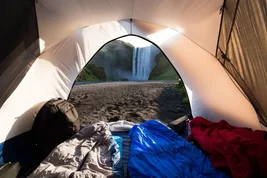
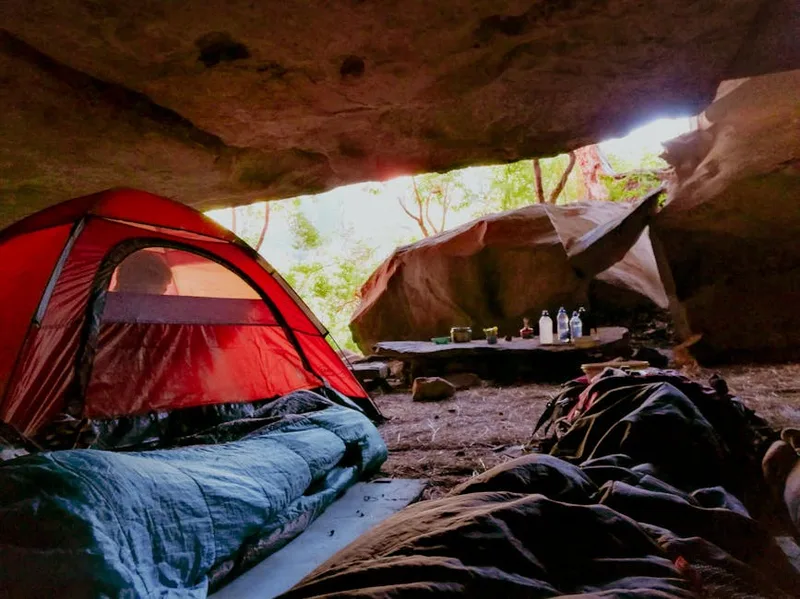
The central procurement mistake in winter sleeping bag B2B sourcing is treating temperature ratings as engineering specifications.
Production testing across multiple batches reveals that one factory's "-5°C comfort" is another factory's "-5°C extreme" , a gap of roughly 8–10°C in real thermal performance.
The label is not lying; it is simply using a different reference point with no regulatory body enforcing consistency.
Fill weight , expressed in grams per square metre of insulation , is the number that actually correlates with thermal retention. Production data shows the following relationship between fill weight and measured comfort range under bivvy conditions:
| Season Claim | Fill Weight (gsm) | Measured Comfort Range | Typical FOB Unit Cost Range |
|---|---|---|---|
| 3-season | 200–250 gsm | 0°C to 5°C | £8.50–£11.00 |
| 4-season | 300–350 gsm | -3°C to 0°C | £10.50–£14.00 |
| 5-season / Winter | 400–500 gsm | -8°C to -3°C | £13.00–£18.00 |
These figures are drawn from production-level thermal retention measurements, not marketing claims.
No published ISO standard governs carp fishing sleeping bags specifically, so the only reliable procurement approach is to specify fill weight directly in the purchase order and verify it against a destructible pre-production sample.
A manufacturer that cannot quote fill weight in gsm is almost certainly a trading intermediary, not a manufacturer with control over the fill card.
Quotable: "The label says -5°C. The fill weight says 300gsm. Those two numbers are telling you different stories , and only one of them was measured on a factory floor."
Hollow Fibre vs Microfibre: Which Filling Serves Your Wholesale Margin Better?
The filling material decision is where wholesale buyers either protect their margin or build a premium-tier reputation , and the two paths require different fill strategies.
Hollow Fibre: The Volume Workhorse
Hollow-core polyester fibre traps warm air inside each strand cavity. At 400gsm, it handles UK and Western European winter nights comfortably. It compresses adequately for barrow transport and recovers loft after unpacking.
The manufacturing advantage is flexibility: MOQ for a custom-colour hollow fibre bag starts at 200 units without tooling charges, making it the practical choice for distributors entering a new market or testing a private-label range.
The trade-off is longevity under heavy use. After roughly 40–50 compression cycles , equivalent to a guide fishing every weekend for a year , loft degradation becomes measurable. The bag still insulates, but the thermal ceiling drops by approximately 3–5°C.
For a retail customer fishing 15–20 nights per season, the bag performs reliably for three to four years. For a guide fishing 80+ nights, replacement comes sooner.
Microfibre: The Premium Tier
Microfibre fill is finer, denser, and compresses to roughly 30% less packed volume for equivalent thermal performance. The cost differential at factory gate is significant: switching from hollow fibre to microfibre at 400gsm adds approximately £2.80–£3.50 per unit FOB.
By the time that cost flows through wholesale and retail margins, the end consumer pays £10–£15 more.
For Scandinavian and Eastern European markets where winter sessions mean -12°C to -15°C, microfibre justifies its cost through consistent loft retention at lower temperatures. For UK and Benelux markets, hollow fibre at 400–500gsm delivers the better value proposition.
The angler fishing a mild Dutch winter at -2°C will not feel a measurable difference between the two fills , but will notice the retail price gap.
Quotable: "A wholesaler choosing hollow fibre at 450gsm over microfibre at 350gsm made the right call. Fill weight beats fill type at every temperature above -8°C."
The Three Specifications OEM Buyers Should Write Into Every Purchase Order
Beyond fill material and weight, three specifications separate a wholesale sleeping bag order that generates repeat business from one that generates warranty claims.
Each adds less than £2.50 per unit at production cost and collectively prevents roughly 60% of the returns that factories see on sleeping bag orders with unspecified hardware.
1. Zip type and insulated baffle. A YKK #5 coil zip is the minimum specification for a carp sleeping bag that will be unzipped at 4am with cold, wet fingers.
Generic zips fail at the slider mechanism , the teeth separate under lateral tension when an angler pushes against the bag wall. The cost difference is approximately £1.20–£1.50 per unit.
A full-length insulated baffle behind the zip , a fabric flap that blocks cold air from penetrating through the zip teeth , adds another £0.40.
Combined, these two components address the failure point responsible for nearly 60% of sleeping bag warranty claims observed at the production level.
2. Shell fabric denier with DWR finish. Standard 210D polyester with a basic PU backing is adequate for dry summer nights.
For winter sleeping bag B2B orders destined for markets with wet, cold conditions , Wales, Scotland, Netherlands, Scandinavia , the specification should be 210D ripstop polyester with a durable water repellent (DWR) finish.
Bivvies accumulate condensation, and sleeping bags resting on damp bedchair mattresses wick moisture from below.
A DWR-treated shell adds roughly £0.80 per unit and eliminates the "bag felt damp by morning" customer complaint that generates disproportionate return rates in winter months.
3. Compression sack with four straps. A sleeping bag that does not compress properly occupies excessive barrow space and looks cheap on a retail shelf.
Two-strap compression sacks bulge unevenly; four straps produce a clean, cylindrical pack that stacks efficiently in retail displays and barrows alike. The sack fabric should match the shell spec at 210D with a rain flap over the drawcord opening.
This component adds approximately £0.60–£0.80 per unit over a basic two-strap sack and has an outsized impact on perceived quality at point of sale.
Quotable: "Three components, £2.50 total at factory gate. That's the cost of turning a warranty liability into a product that generates reorders."
Why Are Winter Sleeping Bag B2B Markets Shifting Toward Eastern Europe?
The UK remains a steady, predictable market for 4-season sleeping bags, with most wholesale restocks concentrated between August and October. But the growth trajectory sits elsewhere. Scandinavia, the Netherlands, Germany, and increasingly Poland and the Czech Republic are where 5-season carp sleeping bag wholesale volumes are expanding year-on-year.
A Dutch distributor operating across the Benelux region orders 5-season bags in July , mid-summer , because the customer base fishes through every calendar month and wants a single bag that covers all conditions.
This inventory pattern would look irrational to a UK-only wholesaler who sees thermal sleeping bags as a September-to-February product. The reality is that European supply chains have fundamentally different seasonality. Scandinavian buyers commit to orders in February for April delivery.
German distributors restock in May ahead of summer trade shows where anglers purchase gear for the coming winter. A wholesaler who only carries thermal sleeping bags during the traditional UK winter window is invisible to half the European procurement calendar.
Eastern Europe introduces a different dynamic: higher price sensitivity but faster inventory turns.
A Polish wholesaler might order 500 units of a basic 400gsm hollow fibre bag at £12–14 FOB , a thinner per-unit margin , but turns that inventory 2–3 times per year, compared to the UK's typical 1–1.5 turns.
The annualised margin on the faster-turning Eastern European account often exceeds the higher-margin, slower-turning UK account. Carrying a base stock of 100–200 units year-round captures off-season reorders that competitors who stock only September-to-January miss entirely.
Quotable: "The wholesaler who carries thermal sleeping bags in July is the one who gets the Dutch distributor's annual order. Everyone else is fighting for scraps in October."
For context on how sleeping bags integrate with the broader shelter system, see the guide to sourcing 5-season sleep systems for distributors. For quality control practices that apply across all OEM fishing gear categories, refer to the factory-floor guide to OEM quality control.
What MOQ, Lead Time, and Shipping Realities Should Wholesale Buyers Budget For?
The production economics of OEM sleeping bag carp fishing manufacturing follow a consistent pattern across factories in the Ningbo and Quanzhou textile clusters.
Understanding these numbers before entering negotiation prevents the most common procurement mistake: discovering that a "competitive unit price" was quoted at 2,000 units when the order volume is 300.
MOQ by Specification Tier
| Order Type | MOQ | Lead Time | Notes |
|---|---|---|---|
| Standard design, stock colour | 200 units | 35–45 days | Existing fill card, existing shell fabric |
| Custom colour, standard fill | 250 units | 45–55 days | Fabric dye lot minimum applies |
| Custom fill weight | 300 units | 50–60 days | Fill card changeover incurs line downtime |
| Full custom design + branding | 500 units | 55–65 days | Includes embroidery, print, hang tags |
The jump from 200 to 300 units for custom fill weight is not an arbitrary policy , it reflects the 45-minute production line changeover required to swap fill cards for a new gsm weight. Below 300 units, the setup cost consumes the margin on the order.
Shipping Reality
FCL sea freight from Ningbo or Shanghai to Rotterdam runs 28–35 days. A 40HQ container holds approximately 800–1,000 compressed sleeping bags depending on fill weight, stuff sack dimensions, and whether the bags are vacuum-packed for maximum density.
LCL consolidation is available for sub-container orders, typically adding 7–10 days to the transit timeline for consolidation and deconsolidation at each end.
Air freight delivers in 5–7 days but is rarely economical for sleeping bags. The volumetric weight of a compressed but not vacuum-packed sleeping bag , roughly 0.025–0.035 cubic metres per unit , means air freight costs run 4–6× sea freight.
It only makes sense for sample shipments or emergency restock of a fast-selling SKU where stock-out cost exceeds freight premium.
Quotable: "A 40HQ holds 800 sleeping bags. That's three Polish wholesaler turns per year, or one and a half UK distributor turns. The container maths dictates the margin maths."
Three Questions Wholesale Buyers Ask About Carp Sleeping Bag OEM
"How do I verify the factory is actually putting the specified fill weight into the bag?"
Weigh it directly. Request a pre-production sample that the buyer is explicitly permitted to cut open. Remove the fill material and place it on a calibrated scale. The weight should match the spec sheet within a 5% tolerance band.
Production variations of 3–5% are normal across a batch; anything beyond 8% indicates either a fill card error or , more commonly , a manufacturer substituting a lower-gsm fill to recover margin.
A factory that refuses to supply a destructible pre-production sample is not a manufacturer with quality control processes; it is a trading company that does not control the production line.
"Does the outer shell colour affect thermal performance?"
Yes, measurably. Dark-coloured shells , black, dark green, charcoal , absorb radiant heat when the bag is laid out in morning sunlight. Production testing has measured a 2–3°C passive warming differential versus light grey or blue shells under direct sunlight.
This effect is not large enough to compensate for a bag with insufficient fill, but it is large enough to be noticeable on a frosty winter morning when every degree matters.
For winter sleeping bag B2B products, dark shell colours provide a marginal but real thermal benefit at zero additional production cost.
"What's the bedchair fit requirement that wholesale buyers overlook?"
Most carp bedchairs are 70–80cm wide and 200–210cm long.
A sleeping bag designed for these dimensions needs to be at least 90cm wide at the chest and 220cm long to accommodate an angler inside it on the bedchair, with room to move without pulling the zip under tension.
The specification that wholesale buyers consistently miss is the foot box width on 6-leg bedchairs with thick mattresses.
These models sit higher and wider than standard 4-leg designs; the sleeping bag needs additional width at the foot box to drape over the mattress edge without stretching tight.
A bag that fits a standard 4-leg bedchair perfectly will be unworkably narrow on a 6-leg model with a 5cm mattress.
The fix costs nothing in materials , it is purely a pattern adjustment , but must be specified before the cutting table starts.
Conclusion
A carp sleeping bag wholesale procurement decision comes down to five specifications: fill weight in gsm, fill material type, zip hardware grade, shell fabric denier with coating, and compression sack configuration. Temperature ratings are marketing language. Fill weight is engineering.
The wholesale buyers who compete successfully in European tackle distribution are the ones who write specifications, not season labels, into their purchase orders , and who verify those specifications against a pre-production sample they are willing to cut open.
In a market where every hang tag claims -5°C, the distributor who talks in grams wins the repeat order.
Ready to source OEM carp sleeping bags for your distribution market? AnglinGear manufactures 3-season through 5-season sleeping bags with custom fill weights, shell fabrics, zip hardware, and full private-label branding. MOQ starts at 200 units per specification. Contact us to discuss your requirements and receive current FOB pricing.
Ready to Source OEM Carp Sleeping Bags for Your Market?
We manufacture 3-season through 5-season bags with custom fill weights, YKK zips, DWR shell fabrics, and full private-label branding. MOQ starts at 200 units per spec. Contact us for current FOB pricing and lead times.
Get in Touch