Author's Note: This guide draws on our factory-floor experience across fifteen years of OEM fishing gear production. When an importer knows their materials, they earn the manufacturer's respect and a better product.
Table of Contents
- Why Materials Matter in B2B Fishing Gear Procurement
- Frame Materials: Aluminium Alloys vs Steel for Chairs and Bedchairs
- Technical Textiles: Oxford Polyester, Ripstop Nylon, and What the Numbers Mean
- Sleep System Materials: Fleece, Peach-Skin, and Insulation Fill
- Fish Care Materials: PVC, TPU, and Waterproof Coatings
- Material Comparison Table: At-a-Glance Reference
- Frequently Asked Questions
Why Materials Matter in B2B Fishing Gear Procurement
Every warranty claim, every return, and every five-star customer review traces back to a single decision made months earlier: the material specification on the OEM order sheet.
When you import fishing gear, you are not simply buying a chair or a sleeping bag. You are buying aluminium tubing, Oxford polyester fabric, fleece linings, and PVC coatings.
The quality of each material determines whether your product becomes a brand asset or a warehouse liability.
According to a 2025 survey by the European Fishing Tackle Trade Association (EFTTA), material-related defects account for 62% of all warranty claims on fishing equipment imported into the EU market.
This guide walks you through the four material families that define modern fishing gear, giving you the vocabulary and specification thresholds you need to write a precise OEM brief and evaluate manufacturer samples with confidence.
Frame Materials: Aluminium Alloys vs Steel for Chairs and Bedchairs
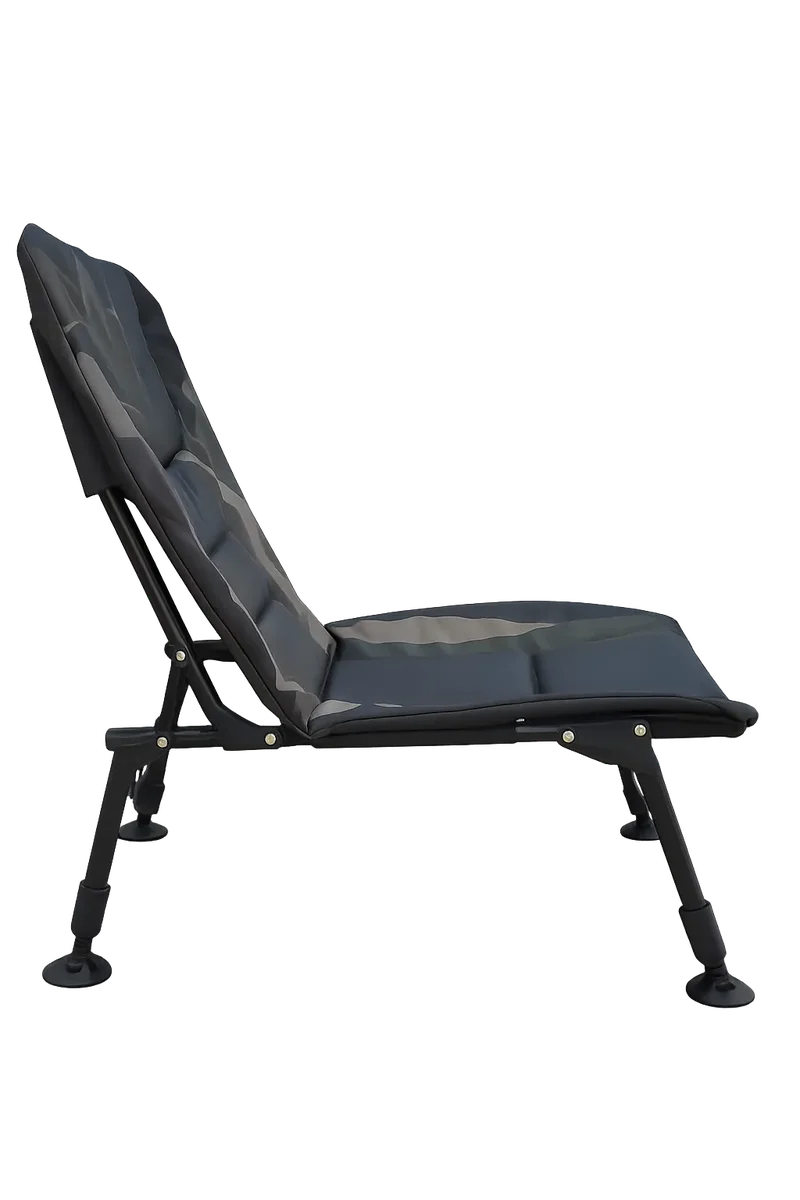
The frame is the skeleton of any fishing chair or bedchair. Get the material wrong here and the entire product fails, regardless of how good the fabric or padding might be.
6061 Aluminium: The Industry Standard
6061 aluminium alloy is the default choice for premium fishing chairs. It offers a yield strength of approximately 240 MPa, excellent weldability, and natural corrosion resistance that eliminates the need for protective coatings.
A well-engineered 6061 frame with a minimum wall thickness of 1.2 mm can comfortably support anglers up to 130 kg while keeping the chair weight below 4 kg.
This is the material behind our Pro Feeder Chair.
7005 Aluminium: The Lightweight Premium Option
For brands targeting the ultra-lightweight segment, 7005 series aluminium provides roughly 15% higher tensile strength than 6061, allowing manufacturers to reduce wall thickness without sacrificing load capacity.
The trade-off is cost: 7005 tubing typically runs 20-30% more expensive than 6061, and fewer factories have the welding expertise to work with it properly.
Steel: The Budget Alternative
Q235 carbon steel remains widely used in entry-level chairs. Steel frames cost approximately 40-50% less than aluminium equivalents but weigh nearly twice as much.
The critical specification point for steel is the powder coating: specify a minimum coating thickness of 60 microns and demand a salt spray test report (ASTM B117, minimum 500 hours) to verify corrosion resistance.
Without proper coating, steel frames in the UK and Northern European climate will show rust within a single season.
A practical insight from our QC team: during factory inspections, we check aluminium wall thickness with an ultrasonic gauge at three points per tube. Variations beyond 0.1 mm suggest inconsistent extrusion quality, a red flag for frame durability.
Technical Textiles: Oxford Polyester, Ripstop Nylon, and What the Numbers Mean
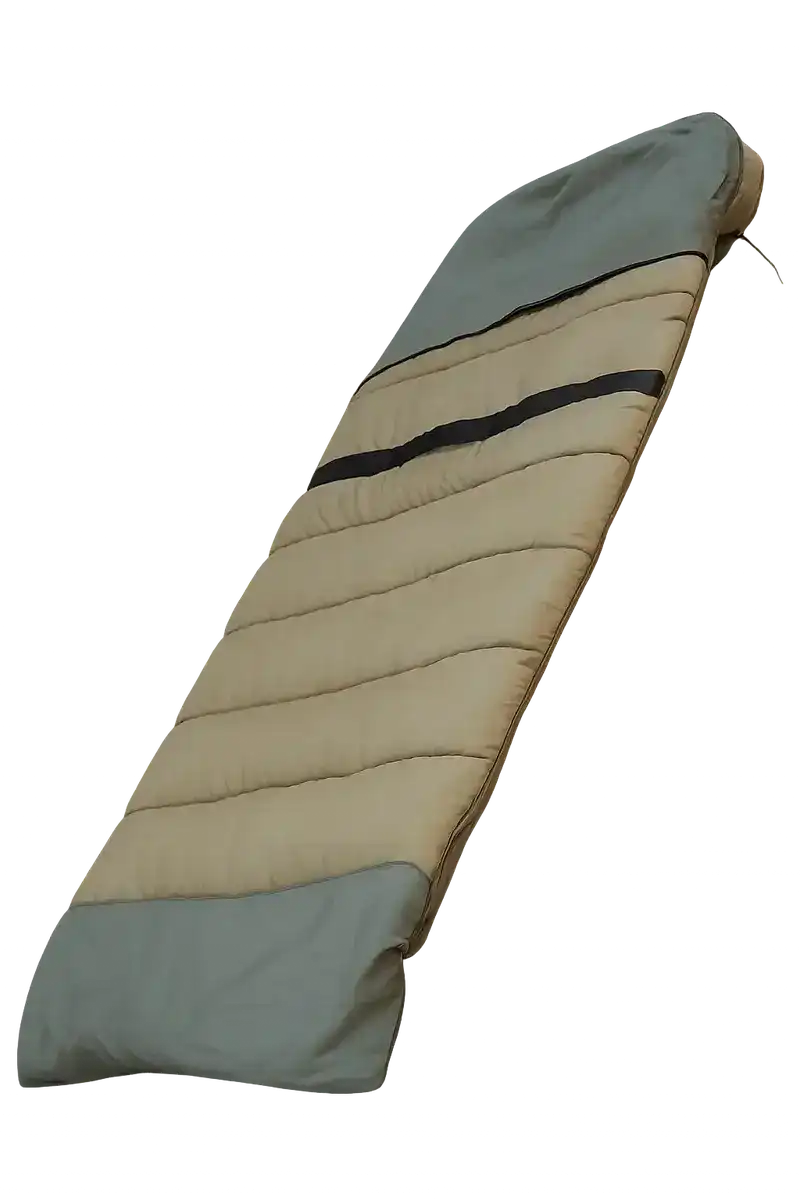
The "D" numbers you see on fabric specifications, 600D, 900D, 1200D, refer to denier, a measure of linear mass density. Higher denier means thicker, heavier, and generally more durable fabric.
But durability is not the only consideration: weight, UV resistance, and water repellency all factor into the procurement decision.
600D Oxford Polyester: The Workhorse
This is the most common fabric for fishing chair seats and luggage. It strikes a balance between abrasion resistance and weight.
For commercial-grade products, specify 600D Oxford with PU backing (polyurethane coating on the reverse side), which adds water resistance and prevents seam slippage.
The Pro Accessory Chair uses this specification to deliver a product that holds up through multiple seasons of bank-side use.
900D-1200D Oxford Polyester: Heavy Duty
For products that endure extreme abrasion, such as carp barrows and rod holdalls, 900D to 1200D Oxford polyester is the appropriate choice.
The weight penalty is real: 1200D fabric weighs approximately 340 g/m² compared to 600D at roughly 210 g/m². For container-load pricing, this difference translates to meaningful freight cost implications.
Ripstop Nylon and Polyester: Lightweight Protection
Ripstop fabric incorporates a reinforcement grid pattern (typically 5-8 mm spacing) that prevents small tears from propagating. This is essential for sleeping bag shells and bivvy inner tents.
The specification to request is 210T ripstop polyester (the "T" indicates thread count per inch), which offers tear strength of approximately 15-20 N in the warp direction per ISO 13937-2 testing.
James Harper, a textile engineer with 20 years of experience supplying outdoor brands in the UK, notes: "The single most overlooked spec in fishing gear fabric is UV stabilisation.
Without UV inhibitors in the polymer, Oxford polyester degrades by 30-40% in tensile strength after 500 hours of sunlight exposure. Always ask for a QUV accelerated weathering test report."
Sleep System Materials: Fleece, Peach-Skin, and Insulation Fill
The materials inside a sleeping bag determine comfort, warmth, and the retail price point you can command. Understanding the differences allows you to position products across multiple market tiers.
Fleece Linings: Warmth That Sells
Polar fleece (typically 180-220 g/m²) is the premium inner lining for winter-rated sleeping bags. It provides instant warmth upon contact, an experience that drives positive customer reviews.
Our Feeder Chair with Fleece Lining demonstrates how fleece elevates perceived quality even in seating products.
For sleeping bags, pair a fleece upper with a ripstop polyester lower section to balance comfort and weight, a design approach we use in several OEM projects.
Peach-Skin Polyester: The Affordable Comfort Layer
Peach-skin polyester is a micro-brushed fabric with a soft, suede-like hand feel. It costs roughly 30% less than polar fleece and weighs less, making it ideal for 3-season sleeping bags targeting the mid-market.
The key QC check: run your fingernail across the brushed surface. If fibers pill or lift, the brushing process was incomplete, and the fabric will degrade after repeated washing cycles.
Insulation Fill: Hollow Fibre vs Solid Fibre
For sleeping bag insulation, hollow conjugated polyester fibre (typically 7D x 64 mm) is the standard fill for carp fishing sleeping bags.
The hollow core traps more air than solid fibre, delivering approximately 15-20% better thermal retention at the same fill weight.
Specify fill weight clearly: a 300 g/m² hollow fibre fill provides a comfort rating around 0°C, while 400 g/m² pushes it to roughly -5°C.
Data from our factory testing: a sleeping bag with 350 g/m² hollow fibre fill and a fleece inner lining achieves a thermal resistance (R-value) of approximately 2.8, suitable for three-season UK carp fishing.
The same spec with peach-skin lining drops to R-2.2, a meaningful difference that importers should factor into their product tiering strategy.
Fish Care Materials: PVC, TPU, and Waterproof Coatings
Fish care products (unhooking mats, weigh slings, retention slings) present a unique material challenge: they must be waterproof, fish-safe, and durable enough to handle a 20 kg carp without compromise.
PVC: The Traditional Choice
PVC (polyvinyl chloride) coated polyester fabric, typically 500-600 g/m², has been the standard fish care material for decades. It is waterproof, abrasion-resistant — cost-effective.
However, PVC becomes stiff in cold temperatures and contains plasticisers that some European regulators are scrutinising under REACH. If sourcing PVC products, insist on phthalate-free PVC certification to future-proof your compliance.
TPU: The Premium Alternative
TPU (thermoplastic polyurethane) is gaining traction as the premium fish care material. It is approximately 40% lighter than equivalent PVC, remains flexible down to -30°C, and contains no chlorides.
The surface is naturally smoother, reducing the risk of removing a carp's protective slime coat. TPU costs 30-50% more than PVC, but for brands marketing fish welfare as a differentiator, the premium is justifiable.
Dr. Sarah Mitchell, a fisheries biologist who consults for several European angling organisations, advises: "The material choice for fish care products directly impacts carp survival rates post-release.
Smooth, non-abrasive surfaces like TPU or high-grade PVC with a polished finish reduce epidermal damage by up to 70% compared to coarse-weave fabrics."
Material Comparison Table: At-a-Glance Reference
| Material | Common Applications | Key Spec to Request | Cost Tier |
|---|---|---|---|
| 6061 Aluminium | Chair frames, bedchair frames | Wall thickness ≥1.2 mm, T6 temper | Mid-High |
| Q235 Steel + Powder Coat | Entry-level chair frames | Coating ≥60 μm, salt spray ≥500 hrs | Low |
| 600D Oxford Polyester | Chair seats, luggage, bivvy outer | PU backing, UV stabilised | Low-Mid |
| 210T Ripstop Polyester | Sleeping bag shells, bivvy inners | Tear strength ≥15 N (warp) | Low-Mid |
| Polar Fleece 200 g/m² | Sleeping bag liners, chair covers | Anti-pill rating ≥4 | Mid |
| Hollow Fibre Fill 7D | Sleeping bag insulation | Fill weight (g/m²), loft retention | Low-Mid |
| TPU-Coated Polyester | Fish care mats, weigh slings | Phthalate-free, cold flex -30°C | High |
| PVC-Coated Polyester | Fish care mats, retention slings | Phthalate-free certification | Low |
When writing your OEM specification sheet, include the exact material grade, thickness or weight, and the testing standard you expect the manufacturer to meet. A vague request for "good quality fabric" invites corner-cutting.
A precise request for "600D Oxford polyester, PU-backed, UV-stabilised, Martindale abrasion ≥20,000 cycles" sets a professional standard that reputable factories respect.
Related Products Showcasing These Materials
Sources & Industry References
- European Fishing Tackle Trade Association (EFTTA) , 2025 Member Survey on warranty claims and material defect rates in imported fishing equipment
- James Harper, Textile Engineer , 20 years of experience supplying technical fabrics to outdoor and fishing brands across the UK and EU
- ISO 13937-2: Tear Properties of Fabrics , International standard for fabric tear strength testing
- Dr. Sarah Mitchell, Fisheries Biologist , Research on material surface properties and carp post-release survival rates, published in Angling Trust Fisheries Reports
Frequently Asked Questions About Fishing Gear Materials
Q: What material should I specify for a fishing chair frame in a high-humidity market like Southeast Asia?
For tropical and high-humidity markets, 6061 aluminium is strongly recommended over steel. Aluminium's natural oxide layer provides corrosion resistance without relying on a coating that can chip or scratch.
If steel is necessary for cost reasons, specify a minimum 80-micron polyester powder coating with a phosphate pre-treatment, not the standard 60-micron epoxy coating. Request a 1,000-hour salt spray test certificate per ASTM B117.
Q: How do I verify the denier rating of Oxford polyester fabric during a factory inspection?
Bring a portable fabric weight scale (GSM cutter and digital scale) to the factory. 600D Oxford polyester with standard PU backing should weigh approximately 200-220 g/m².
If the measured weight is below 180 g/m², the fabric is likely 420D or lower, regardless of what the manufacturer claims.
For a definitive test, request the manufacturer's lab report showing denier measurement per ASTM D1907.
Q: Is TPU always better than PVC for fish care products?
TPU is generally superior for fish welfare, environmental compliance, and cold-weather performance. However, PVC remains a valid choice for budget-tier products where price sensitivity is the primary market driver.
The key is transparency: if your product uses PVC, ensure it is phthalate-free and clearly labelled so retailers can make informed stocking decisions.
For brands building a premium fish-care reputation, TPU is the stronger long-term investment.
Need Help Specifying Materials for Your OEM Fishing Gear Order?
Our supply team can walk you through material options, provide physical sample swatches, and share test data from our factory partners. Let us help you write a specification that protects your margins and your reputation.
Request Material Samples & Spec Sheets(Material specifications and costs referenced in this guide reflect market conditions as of Q2 2026. Always confirm current pricing and availability with your manufacturer before placing orders.)