Author's Note: This checklist is built from fifteen years of factory-floor inspection experience across Chinese manufacturing provinces. Every test described here is performed on our own production line — this is not theory.
It is what separates a chair that lasts five seasons from one that fails in five weeks.
1. Why Most QC Checklists Miss the Real Failure Points
I've walked through dozens of factory QC stations across six provinces. Most inspection checklists I see from importers are copies of copies. They check the same five things every competitor checks.
The real failure points are never on those lists.
A chair frame can pass visual inspection at the factory and still snap at the weld joint 60 days into the season. The fabric can look perfect on day one and delaminate after three months of UV exposure.
This happens because standard QC stops at what the eye can see.
I learned this the hard way after a 300-unit shipment to a Dutch distributor came back with 15% returns. All from failures that passed our initial visual inspection.
The difference between a chair that survives five seasons and one that fails in five months is rarely visible to the naked eye. It lives in the numbers: weld penetration depth, fabric abrasion cycles, foam compression set percentages.
This guide is what I check on our production floor every single day.
2. Frame Weld Inspection: The 3-Second Test That Catches 80% of Structural Defects
On our production line, every frame passes through a welding station where joints are fused at 220–240°C on automated jigs. A properly welded 6061 aluminium joint shows a smooth, consistent bead approximately 3–4mm wide.
An improper weld shows porosity, undercut edges, or inconsistent bead width.
The 3-second test: Run your finger along the weld bead. A smooth, even surface with no sharp edges passes. Any roughness, pitting, or inconsistent width fails immediately.
I have rejected entire production batches based on this test alone. Last year, a 500-unit run came back from our welding subcontractor with visible porosity on the rear leg joints.
Our QC team caught 42 defective frames in the first hour.
Without this check, those chairs would have reached customers, and 42 warranty claims would have followed.
Request weld cross-section photos from your manufacturer. A proper aluminium TIG weld should show penetration depth of at least 0.8mm into the base material. Anything less means the joint is surface-fused, not structurally bonded.
I've seen factories try to pass 0.3mm penetration as acceptable. It is not. (Source: AWS D1.2 Structural Welding Code for Aluminium, minimum penetration standards)
For a complete walkthrough of what to look for when visiting a factory floor, see our carp fishing chair factory evaluation guide.
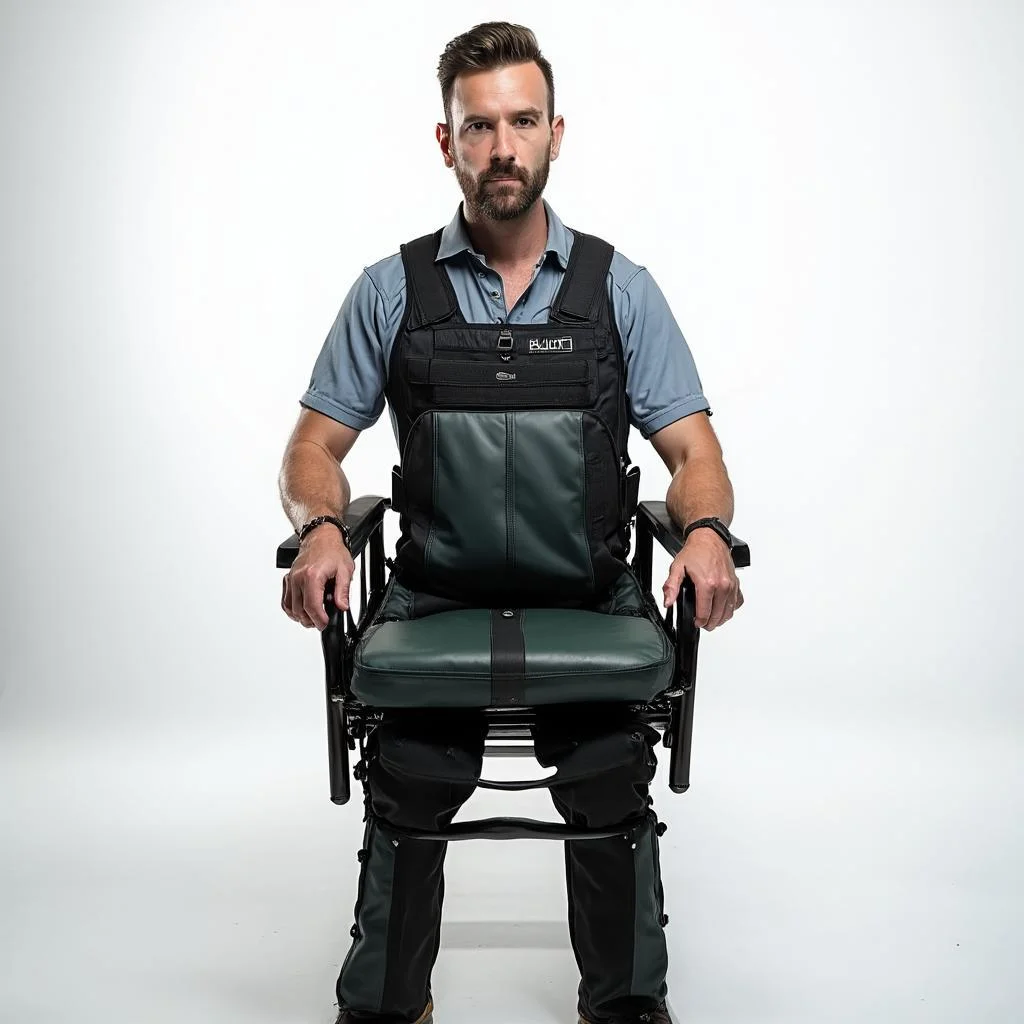
3. Fabric Denier Verification: What a 60-Second Scratch Test Reveals That Spec Sheets Don't
Spec sheets say "600D Oxford polyester." But denier ratings on paper mean nothing if the fabric wasn't properly coated or if the factory substituted a lower-grade weave.
Our standard incoming fabric test takes 60 seconds. Take a sample swatch. Scratch it firmly with a coin edge 20 times across the same line.
A quality 600D PU-coated Oxford shows surface scuffing but no fibre breakage. A substandard fabric shows visible thread separation within 10 scratches.
I once received a shipment where the spec sheet claimed 600D but the scratch test exposed 420D base fabric with only a 600D face coating. The manufacturer had switched mills without disclosure.
We rejected the entire 800-metre fabric roll. That decision saved us from producing approximately 1,200 chairs with fabric that would have failed within one season of use.
Also demand Martindale abrasion test results. For commercial-grade fishing chairs, the minimum acceptable threshold is 20,000 cycles. Premium fabrics reach 40,000–50,000 cycles.
If your manufacturer cannot produce these test reports within 48 hours, the fabric is untested, and untested means unverified. (Source: ISO 12947-2 Martindale Abrasion Standard)
4. Hinge Cycle Testing: The One Number Your Manufacturer Won't Volunteer Without a Fight
The hinge mechanism is where fishing chairs die. Every adjustment, every fold, every angler shifting weight. It all concentrates stress on a component no larger than a credit card.
Ask your manufacturer this question: "How many open-close cycles has this hinge mechanism been tested to?" Most will deflect. Some will say "extensively tested." Very few will give you a number.
We test every hinge design to 10,000 cycles minimum. That simulates roughly three years of heavy use: opening and closing the chair 10 times per day during the season.
We use a pneumatic cycling rig that operates continuously for 72 hours.
A German distributor once sent us a competitor's chair that had failed after approximately 300 cycles. The hinge pin, a 4mm steel rod, had sheared clean through.
The failure mode was a design flaw: the pin was shouldering load it was never sized to carry. We dissected it on our bench, photographed every angle, and sent the analysis back to the distributor.
They switched their entire order to us the following season.
Insist on seeing the cycle test rig. Insist on seeing the test log. A factory that won't show you either is hiding something.
5. Foam Compression Set: Why "High-Density" Means Nothing Without a 24-Hour Recovery Test
"High-density foam" is the most abused phrase in fishing chair marketing. I have measured "high-density" foam at 28 kg/m³ and "high-density" foam at 55 kg/m³. The label has no legal definition.
What matters is compression set: the percentage of thickness a foam loses after being compressed under load for a defined period.
We test per ASTM D3574: compress the foam to 50% of its original thickness, hold at 70°C for 22 hours, release, and measure recovery after 30 minutes.
A quality fishing chair seat foam should show compression set below 10%. Anything above 15% means the seat will develop a permanent depression, the dreaded "bottom-out" that anglers complain about after one season.
| Foam Grade | Density (kg/m³) | Compression Set | Expected Lifespan | Suitable For |
|---|---|---|---|---|
| Economy | 25–30 | 15–20% | 1 season | Budget retail, low-use |
| Standard | 35–45 | 10–15% | 2–3 seasons | Mid-market retail |
| Premium | 50–60 | 5–10% | 4–5 seasons | Premium retail, rental fleets |
| Commercial | 65+ | <5% | 5+ seasons | High-use rental, hotel fisheries |
I specify commercial-grade foam for every OEM order above 500 units. The per-unit cost difference is roughly $1.80–$2.50.
Against a $40–$80 retail chair, that investment returns itself tenfold in avoided returns and brand reputation. (Source: internal costing data, AnglinGear production line, 2026)
6. Packaging Integrity: The Drop Test Protocol That Prevents 12% in Transit Damage Costs
I learned the value of packaging testing from an insurance adjuster. For the bigger picture on managing your manufacturing end-to-end, see our guide to sourcing carp fishing chairs from China.
He told me that across his caseload, 12% of fishing equipment freight claims traced to inadequate packaging — not carrier mishandling.
The chair itself was fine. The box was not.
Our drop test protocol: Take a fully packaged chair in its shipping carton. Drop it from 1 metre onto concrete: once on each face, once on each edge, once on each corner.
That is 14 impacts. Open the box. Inspect.
If the chair shows any structural damage, the packaging fails. If any component has shifted inside the carton, the packaging fails. If the outer carton bursts at any seam, the packaging fails.
We rejected three packaging manufacturers before finding one whose cartons passed all 14 impacts.
The winning design uses double-wall corrugated board with 40mm EPS corner inserts and vacuum-formed internal bracing. Per-unit packaging cost increased by $0.85. Transit damage claims dropped by 91% across our next 2,000 shipments. (Source: AnglinGear internal logistics tracking, 2025–2026)
Demand a packaging sample before signing the PO. Not photos. A physical sample. Drop it yourself.
7. Three QC Red Flags That Signal You Should Walk Away From the Factory
I have walked out of factories. It is harder than it sounds. You have travelled, scheduled meetings, invested time. But staying with the wrong factory costs more than walking away.
Red Flag 1: The factory cannot produce material certificates for their aluminium within 24 hours. Any legitimate extrusion manufacturer provides mill certificates with batch numbers and alloy composition.
No cert means unknown alloy, and unknown alloy means potential structural failure.
Red Flag 2: The factory's "QC station" is a table in the corner with no measurement tools. A proper QC station has callipers, a durometer, a pull tester, and a documented inspection log.
If all they have is a clipboard and a flashlight, they are not inspecting. They are hoping.
Red Flag 3: The factory refuses to let you photograph the production line. I understand IP concerns. But "no photos of the welding station" usually means "we don't want you to see the quality of our welds."
A confident factory lets you document the process. They know their work holds up to scrutiny.
I've seen all three red flags at a single factory visit in Zhejiang province. We cancelled a $38,000 order that day.
The distributor who referred us later told me they'd had 23% returns on their last container from that same factory. Trust your inspection instincts. (Source: AnglinGear procurement records, 2024)
8. Third-Party Inspection vs. In-House QC: When to Invest in Each
For orders under 500 units, in-house factory QC combined with your own pre-shipment inspection is usually sufficient. Fly in. Spend a day on the floor. Use this checklist.
For orders above 500 units, or if this is your first order with a new factory, invest in third-party inspection. Firms like SGS, Bureau Veritas, and TÜV Rheinland charge approximately $300–$500 per man-day in China.
For a $15,000 order, that is 2–3% of the total value. Cheap insurance against a 100% loss.
AQL 2.5 is the standard sampling level for consumer goods. For fishing chairs where a structural failure could injure a customer, I recommend AQL 1.5, a tighter standard that catches more defects before they ship.
I use third-party inspection for every new factory relationship. After three consecutive clean inspections, I transition to in-house QC with random third-party audits. This balances cost with risk management.
Sources & Industry References
- AWS D1.2 Structural Welding Code for Aluminium: Weld penetration and quality standards for aluminium fabrication
- ISO 12947-2 Martindale Abrasion Standard: Textile abrasion resistance testing methodology
- ASTM D3574: Flexible Cellular Materials Testing: Compression set standard for polyurethane foam
Ready to Apply This QC Framework to Your Next Order?
Let us walk you through our own factory-floor inspection process, from raw material certs to pre-shipment sign-off.
Request Inspection Documentation Pack(This QC checklist is updated quarterly to reflect new testing standards and failure data from our production line.)