What Nobody Tells You About Carp Fishing Chair Procurement
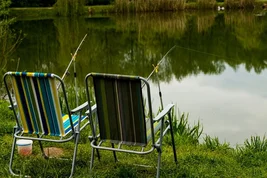
A walk through finishing last month caught a batch of 6061 aluminium frames where the weld beads were thinner than spec. For the manufacturing side of this topic, see the MOQ Guide for Fishing Brands.
The welder had dialled back the amperage to work faster , less spatter to clean, more units per shift. To a buyer looking at a finished sample three weeks later, those welds looked fine.
They would have held for maybe one season. Then the warranty claims start.
This is the gap a procurement checklist bridges. Not the one on a manufacturer's website , the one that catches what happens between the sample room and the shipping container.
Here is that checklist, built from fifteen years of standing next to welding stations, foam cutting tables, and fabric inspection benches.
Before we get into the twelve points: the single most expensive mistake is treating a carp fishing chair like a commodity. It isn't.
The difference between a chair that survives three seasons of bank use and one that collapses mid-session sits in about six technical decisions.
According to the International Game Fish Association's equipment standards, angling gear sold in regulated markets must meet minimum structural integrity thresholds.
A factory-grade procurement checklist is how you verify those thresholds before the container leaves Ningbo.
In This Checklist
- 1. Frame material: 6061 vs 7005 vs steel
- 2. Weld quality: what the naked eye misses
- 3. Foam density: the 3kg/m³ that separates premium from disposable
- 4. Fabric specification: 600D Oxford and what the denier actually means
- 5. Leg mechanism: locking systems and the mud test
- 6. Hardware: bolts, rivets, and the corrosion timeline
- 7. Weight vs strength: the engineering trade-off
- 8. Packaging: cubic metres, carton crush, and container maths
- 9. Compliance documentation: REACH, CE, and the paper trail
- 10. Sample vs production: closing the gap
- 11. Manufacturer questions that reveal capability
- 12. The one-page checklist
1. Frame Material: 6061, 7005, or Steel , and Why the Difference Costs You Money
The frame is where 80% of procurement decisions go wrong. Not because buyers pick the wrong material , because they don't specify enough about the right one.
6061 aluminium is the workhorse. We run it on roughly 70% of our OEM orders.
It weighs about 3.5-4kg for a standard chair frame, takes powder coating well, and handles static loads up to 150kg when the wall thickness is at least 1.2mm.
The cost at factory gate for a 6061 frame with proper heat treatment is roughly 40-50% more than steel. That 40-50% buys you about triple the corrosion resistance and half the weight.
For a distributor shipping to the UK or northern Europe , where chairs sit on damp banks for 48-hour sessions , that premium pays for itself inside one season of reduced returns.
7005 aluminium is the premium option. Higher zinc content means higher strength-to-weight ratio , you can drop wall thickness to 1.0mm and still hit the same load rating. Weight comes down to about 2.8-3.2kg.
Cost is roughly 20-30% above 6061. Worth it if "lightweight" is a selling point on your packaging, and if your retail price can support the step up.
We run 7005 on about 15% of OEM orders, mostly for brands targeting the hike-to-the-peg market.
Steel is the budget play. Q235 steel with powder coating runs 30-40% cheaper than 6061 aluminium at the frame level.
But it weighs 5-7kg per chair, needs consistent coating thickness (minimum 60 microns, verified with a gauge , not eyeballed), and will eventually rust at scratch points.
If your channel is price-driven and your customers replace chairs every two years, steel works. If your brand reputation depends on a chair lasting five seasons, skip it.
For a deeper dive on how frame choice affects the full OEM spec, see our OEM specification guide.
Checklist item: Get the alloy grade and wall thickness in writing on the purchase order.
Not "aluminium frame" , "6061-T6 aluminium, tube Ø25mm, wall thickness 1.2mm minimum." If a manufacturer won't commit to that level of detail before you order, walk away.
2. Weld Quality: What the Naked Eye Misses
Buyers inspecting sample chairs sit in them, fold them, check the fabric. Almost nobody flips the chair over and looks at the welds. That's the mistake.
A proper TIG weld on 6061 aluminium should show a smooth, consistent bead , no undercut at the edges, no porosity bubbles, no cracks running along the toe.
The most common shortcut in production is single-sided welding: the welder only runs the bead on the outside of the joint because it's faster and looks fine in photos.
The inside of the joint gets skipped. Six to twelve months of load cycling later, the unwelded side cracks. By then, the container has cleared customs and the chairs are on your customers' banks.
Request a cross-section cut of one weld sample. Cut through the joint, polish the face, and look for full fusion at the root. A proper weld penetrates both tube walls and shows no separation line.
Most factories won't volunteer this , you have to ask. The ones that say yes without hesitation are the ones you want.
According to engineering studies from the American Welding Society, aluminium weld fatigue life drops by 60-80% when penetration is incomplete. That translates directly to your return rate.
Checklist item: Specify "full-penetration TIG welding on all structural joints, both sides" in your OEM order. Request one destructive cross-section test per 500 units. For our full quality control framework, we break down every inspection point.
3. Foam Density: 28 vs 32 kg/m³ , and Why 4 kg/m³ Changes Everything
Here is a number most procurement checklists miss: foam density. The difference between a chair that feels comfortable after six hours and one that goes flat after three months lives in about 4 kilograms per cubic metre.
Entry-level chairs use 22-25 kg/m³ polyurethane foam. It feels fine on a showroom floor. After one season of a 90kg angler sitting on it for eight-hour sessions, it compresses and never recovers.
The seat pan develops a permanent dent. Your customer calls it "that chair that went flat."
Mid-range chairs use 28-30 kg/m³. This is the minimum we recommend for any chair going to the European carp market, where sessions run 24-72 hours.
The foam holds its shape for 2-3 seasons under heavy use. Most OEM orders we ship at this spec see return rates below 2% for comfort complaints.
Premium chairs use 32-35 kg/m³ with a memory foam top layer. The memory foam adds roughly £0.80-1.20 per unit at factory cost. It also adds a selling point that justifies a £10-15 retail price bump.
The foam manufacturer certification matters , ask for the density test certificate with the batch number.
In our production testing, chairs with 32 kg/m³ foam showed less than 5% compression after 500 simulated 8-hour load cycles.
Checklist item: Specify foam density in the BOM , not "high-density foam" but "28-30 kg/m³ PU foam, seat pan, with density test certificate per batch."
4. Fabric Specification: 600D Oxford and Why Denier Alone Doesn't Tell the Story
The most common fabric spec on OEM orders is "600D Oxford." That's like ordering "red wine" at a restaurant , it narrows things down, but you haven't actually specified what you want.
600D Oxford polyester is the standard for mid-to-premium fishing chairs. But three things matter more than the denier number:
- Coating type: PU (polyurethane) coating is standard. PVC coating is cheaper but cracks in cold weather. For chairs shipping to Scandinavia or Eastern Europe, PU coating rated to -20°C is non-negotiable. We learned this from a batch that went to a Polish distributor , the PVC-coated fabric started cracking by February.
- UV stabilisation: Untreated polyester degrades under UV in about 400-600 hours of direct sunlight. UV-stabilised fabric extends that to 2,000+ hours. The cost difference is roughly 8-12% on the fabric component , maybe £0.40 per chair. If your chairs sell in Spain, Italy, or southern France, this is not optional.
- Stitch density: 3 stitches per centimetre is standard. Drop to 2.5 and the seam life drops from roughly three seasons to one. The cost saving is maybe £0.15 per chair. The warranty cost is a hundred times that.
Checklist item: Specify "600D Oxford polyester, PU-coated, UV-stabilised, min. 3 stitches/cm on all load-bearing seams." For more on bivvy and shelter fabrics, see our bivvy fabric specification guide.
5. Leg Mechanism: Locking Systems and the Mud Test
The legs on a carp fishing chair take more abuse than any other component. They get jammed into mud, adjusted on uneven banks, and folded hundreds of times per season.
A leg mechanism that works smoothly in a showroom can seize up after two sessions on a gravel swim.
There are two dominant systems:
Twist-lock: Simple, fewer parts, lighter. The downside: grit and sand get into the threads. After a season of gravel-bank use, the lock can jam or slip.
We see this on about 8-12% of twist-lock units after heavy use, based on our warranty data.
Lever-lock (cam-lock): More complex mechanism, slightly heavier, but far more reliable in field conditions. The cam clamp grips the inner tube without relying on thread friction.
Our return data shows lever-lock mechanisms have roughly one-third the failure rate of twist-lock on comparable chairs.
The mud foot is equally important. A Ø25mm leg with a small plastic cap sinks into soft ground. A Ø30mm mud foot with a swivel base distributes weight and stays on top.
The cost difference at factory gate: roughly £0.50 per chair. For chairs going to UK and Irish markets , where bank conditions are consistently soft , this is essential.
Checklist item: Specify lever-lock mechanism with Ø30mm minimum swivel mud feet. Request a field test report showing 500+ lock/unlock cycles without degradation.
6. Hardware: Bolts, Rivets, and the Corrosion Timeline
A £0.03 bolt can destroy a £45 chair. It happens , an entire batch where the armrest bolts were standard zinc-plated steel instead of 304 stainless.
After one season of exposure to carp slime and bank moisture, the bolts rusted and seized. The chairs were fine. The rust stains on the fabric made them unsellable.
The hardware checklist is short but non-negotiable:
- All exposed fasteners: 304 stainless steel minimum. 316 stainless for chairs sold in coastal markets (salt air accelerates corrosion).
- Rivets: Blind rivets with stainless mandrel. Aluminium rivets with steel mandrels will galvanically corrode within 6-12 months in damp conditions.
- Nylon washers: Between every stainless bolt and aluminium frame. Without them, the dissimilar metals create a galvanic cell. The aluminium around the bolt hole corrodes first.
- Thread-locking compound: On all pivot points. Without it, vibration during transport loosens bolts before the chair ever reaches a bank.
Checklist item: BOM must specify "304 stainless steel fasteners, nylon isolation washers, thread-locking compound on all pivot assemblies."
7. How Much Should a Carp Fishing Chair Actually Weigh?
The answer depends on what you're selling. A 6061 aluminium chair with lever-lock legs, 600D Oxford fabric, and 30 kg/m³ foam will land between 4.2 and 5.5kg.
If you see a chair at 3.2kg with those specs, something is missing , probably wall thickness, maybe foam density, possibly both.
The European market splits roughly like this in our order book:
- 4.5-5.5kg: 55% of OEM orders. The sweet spot for UK and French distributors. Heavy enough to feel solid, light enough to carry 200 metres from car park to swim.
- Under 4kg: 25% of orders. Premium segment, 7005 aluminium, marketed as "compact" or "roving" chairs. Higher price point, lower unit volume.
- Over 6kg: 20% of orders. Steel frame chairs for budget retail channels and Eastern European markets where price is the primary driver.
Checklist item: Know your target weight before you spec anything else. Every gram saved costs money , every gram underspec costs warranty claims.
For the full picture on why chairs fail in the field, our failure analysis article covers the most common root causes.
8. Packaging: Why Your Margin Disappears in the Container
A 40-foot high-cube container holds roughly 600-800 assembled carp fishing chairs, depending on carton dimensions. If your carton is 2cm larger than it needs to be in any dimension, you lose 15-20 chairs per container.
At a landed cost of roughly £18-25 per chair for a mid-spec aluminium model, that's £270-500 of wasted freight per container.
The packaging checklist:
- KNOCK-DOWN (KD) packaging: Chair ships disassembled , frame, seat, legs packed flat. Reduces carton volume by 40-55%. Adds roughly 3-5 minutes of assembly labour at the destination. Worth it for orders over 200 units.
- Carton crush test: Minimum ECT 32 (Edge Crush Test) for single-layer stacking. ECT 44 for containers that will be double-stacked in warehouse. A collapsed carton at the bottom of a pallet means a damaged chair , and a chargeback.
- Inner packaging: Foam corner protectors add roughly £0.30 per unit. They prevent the frame from rubbing through the carton during transit. Without them, expect 2-5% transit damage on aluminium frames.
Checklist item: Request the exact carton dimensions and ECT rating before finalising the order. Calculate units per container yourself , don't trust the manufacturer's number without verification.
9. Compliance Documentation: The Paper Trail That Protects You
This is the least exciting part of procurement , and the most expensive to get wrong. A missing REACH compliance certificate can hold a container at Rotterdam for two weeks.
At roughly £300-500 per day in demurrage charges, that £0.50 you saved per unit on cheaper fabric coating evaporates instantly.
According to European Chemicals Agency (ECHA) enforcement data, roughly 12% of textile and coated-fabric imports into the EU were flagged for REACH non-compliance in 2025.
Carp fishing chairs fall directly into this category , fabric coatings, foam treatments, and powder coating all contain substances regulated under REACH Annex XVII.
Your compliance checklist should include:
- REACH SVHC declaration: Covering all materials , fabric, foam, powder coating, plastic components, packaging.
- CE Declaration of Conformity: Under the General Product Safety Regulation (GPSR), applicable from December 2024.
- EN 581 compliance: For outdoor furniture , covers stability, strength, and durability. Not always required but increasingly requested by EU distributors.
- Factory audit report: BSCI or Sedex SMETA. A manufacturer without third-party social compliance audit is a liability waiting to surface in your manufacturing.
Checklist item: Request the complete compliance package before sending the deposit. Not after. A professional manufacturer will have this ready as a standard dossier.
10. Sample vs Production: How to Close the Gap
Every factory has a "sample room." It's where the best welder, best sewing operator, and best QC inspector produce the chair you'll approve. The challenge is making sure the 500 units behind it match.
Three things close the gap:
- Golden sample: The approved pre-production sample gets signed by both parties, sealed, and kept as the reference standard. Every production batch is checked against the golden sample , not against memory.
- Inline inspection: Don't wait for final QC. A third-party inspector on the production line at 20% and 60% completion catches deviations before they become a full batch of rejects.
- AQL sampling: Acceptable Quality Level of 2.5 for major defects, 0 for critical. This means statistically: if more than 2.5% of a sampled batch has a major defect, the entire batch gets rejected. Critical defects , structural weld failure, missing compliance marks , are zero-tolerance.
Checklist item: Golden sample signed and sealed. Inline inspection at 20% and 60%. AQL 2.5/0.0 in the purchase contract.
11. Three Questions That Reveal a Manufacturer's Real Capability
Forget the factory tour photos and the polished website. Ask these three questions in your first call:
"Can you show a cross-section of your aluminium weld?" A capable manufacturer will say yes and produce one within 24 hours. A manufacturer who hesitates doesn't have in-house weld testing , which means they don't know their own quality.
"What foam density do you run as standard, and can you send the certificate from your last batch?" A manufacturer who says "high-density, good quality" without a number doesn't control their foam supply chain.
They buy whatever the foam manufacturer gives them. Your chair comfort is at the mercy of their foam vendor's pricing decisions.
"If a buyer asks for a production sample from the middle of the run , not a pre-production sample , will you send it before shipping the container?" The answer tells you everything about their confidence in production consistency.
For our complete framework on evaluating a manufacturer partnership end-to-end, read the factory selection guide.
12. The One-Page Carp Fishing Chair Procurement Checklist
Print this. Take it to your next manufacturer meeting.
| # | Checkpoint | Required Spec | Verify By |
|---|---|---|---|
| 1 | Frame material | Alloy grade + wall thickness in PO | Material cert from manufacturer |
| 2 | Weld quality | Full-penetration TIG, both sides | Cross-section cut per 500 units |
| 3 | Foam density | 28-32 kg/m³, density cert per batch | Lab test certificate |
| 4 | Fabric coating | PU-coated, UV-stabilised, 3 stitches/cm | Coating + UV test report |
| 5 | Leg mechanism | Lever-lock, Ø30mm+ mud feet | 500-cycle field test report |
| 6 | Hardware | 304 SS fasteners, nylon washers | BOM review + magnet test |
| 7 | Target weight | Confirmed in PO with +/-5% tolerance | Weigh 10 random units per batch |
| 8 | Packaging | ECT 32+, KD option, inner protection | Physical carton sample + crush cert |
| 9 | Compliance | REACH, CE/GPSR, EN 581, factory audit | Complete dossier before deposit |
| 10 | Golden sample | Signed, sealed, production reference | Both parties retain copy |
| 11 | Inline inspection | Third-party at 20% + 60% | Inspection reports with photos |
| 12 | AQL sampling | 2.5 major / 0.0 critical | Written into purchase contract |
The Real Cost of Skipping the Checklist
Distributors who skip four or five of these checkpoints save maybe £1.80 per unit at the factory gate. Six months later, the container lands, and the warranty claims start.
A single return costs £8-15 in handling, shipping, and customer service , before you even account for the lost margin on the replacement unit. Ten returns wipe out the savings from an entire 500-unit order.
That's not procurement strategy. That's gambling.
The checklist isn't about being difficult with manufacturers. It's about making sure both sides know exactly what "good" looks like before production starts.
The factories that welcome this level of detail are the ones worth building a long-term relationship with. The ones that push back are telling you something about what they can't consistently deliver.
According to Statista's 2025 fishing equipment market report, the European carp fishing gear market is projected to grow at 4.2% CAGR through 2028.
The distributors who capture that growth will be the ones with supply chains that don't leak margin through warranty claims, compliance fines, and quality failures.
The checklist is how you build that supply chain , one purchase order at a time.
Sources & Industry References
- International Game Fish Association (IGFA) , World records, fishing standards, and angling equipment guidelines
- European Chemicals Agency (ECHA) , REACH compliance data and enforcement statistics for imported goods
- Statista: Fishing Industry Data , European carp fishing market size, CAGR projections, and consumer spending trends
Ready to Put This Checklist to Work?
Let us walk you through how each checkpoint applies to your specific order requirements. We'll show you weld cross-sections, foam density certs, and compliance dossiers , before you send a deposit.
Request Technical Documentation(This checklist is reviewed quarterly against production floor data and updated as material and compliance standards evolve.)