Table of contents
- Static Load vs Dynamic Load: The Difference Your Customers Feel
- Where Weight Ratings Come From (Factory Testing Reality)
- The Weakest Link: It's Usually Not the Frame
- Aluminum vs Steel: Capacity Isn't Just About Material
- How to Read a Weight Rating in Your OEM Spec Sheet
- What Happens When a Chair Is Overloaded (The Failure Sequence)
Last March we put a new aluminium chair prototype on the test rig. 6061 T6 frame, 1.5mm wall, welded by our best guy. We stacked 150kg of steel plates on the seat centre and set the timer for 24 hours.
The frame was fine the next morning. Zero deflection. The leg lock wasn't.
The right-rear leg had slipped 7mm. The twist collar had held for about 16 hours, then the aluminium threads started to gall. By hour 23 it let go completely.
The chair didn't collapse. It just... settled. A 100kg angler would've felt it as a slow sink on one corner, maybe shrugged and re-adjusted. But if that same angler had dropped into the seat instead of sitting down gently, the lock would've failed instantly.
That's the gap this article covers. The number on the spec sheet tells you one thing. The chair tells your customers something else. If you're a wholesale buyer stocking carp chairs for European retailers, you need to know what "150kg rated" actually guarantees, and what it silently leaves out.
Static Load vs Dynamic Load: The Difference Your Customers Feel
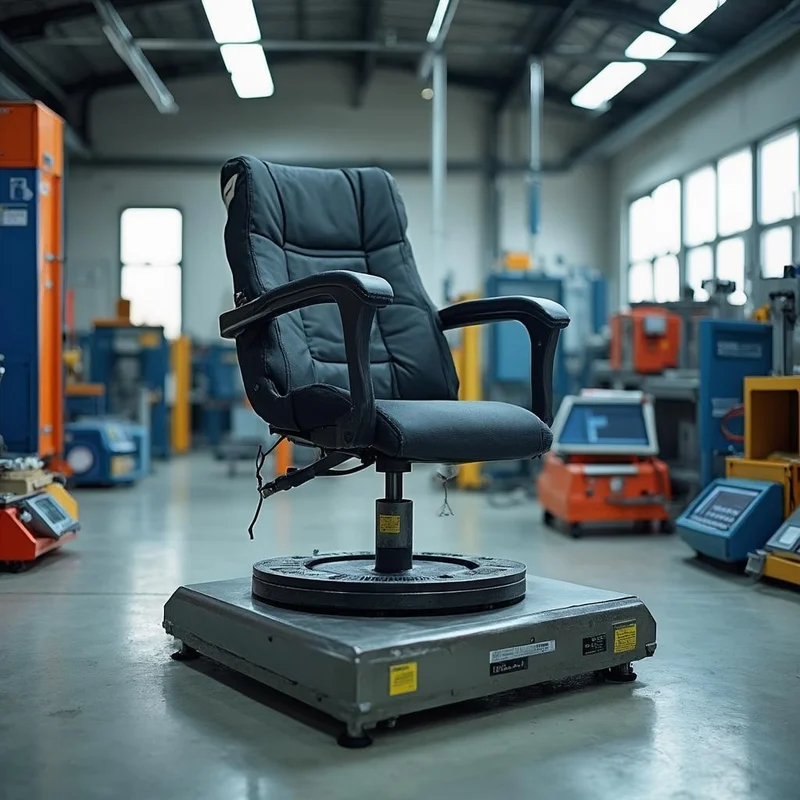
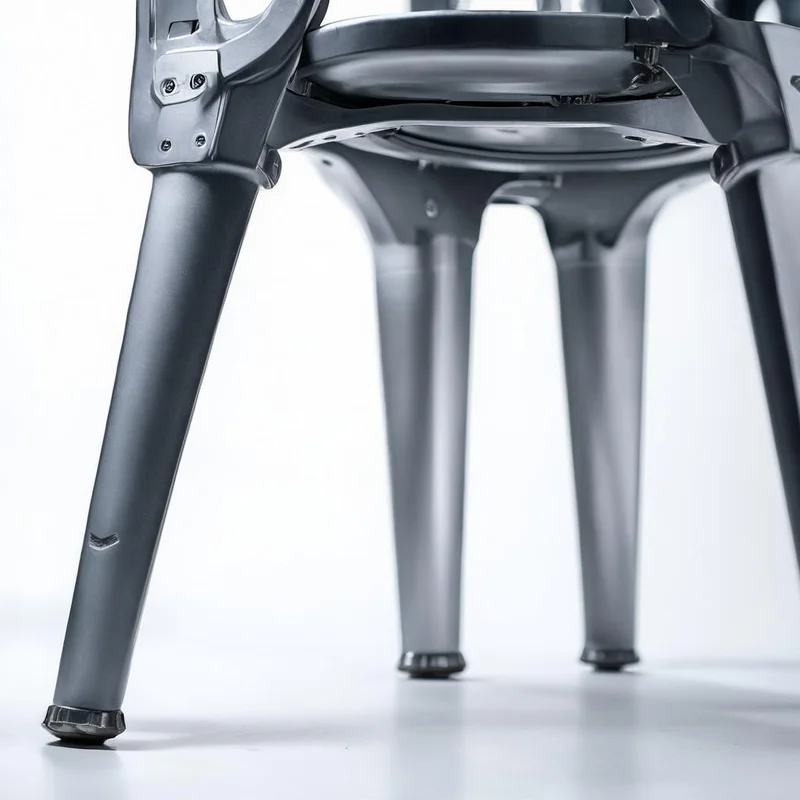
Every weight rating you see on a carp fishing chair is a static load number. The factory places a fixed weight at the seat centre and waits. No movement. No impact. No angler reaching for a rod.
That's not how anyone uses a chair.
A 100kg angler lowering himself into a chair generates roughly 180-200kg of momentary force at the seat surface. The maths isn't complicated: body weight × acceleration × the geometry of the drop.
A sudden sit-down from 15-20cm above the seat (normal behaviour on a bankside) multiplies static body weight by 1.8× to 2.0×.
Nobody tests for this in the standard rating. The 150kg static rating on a Trakker Colossus or a Fox Super Deluxe tells you the frame won't permanently bend under 150kg of dead weight for 24 hours.
It doesn't tell you what happens when a 110kg angler flops into the chair after a 14-hour session.
Dynamic load testing exists. It's just not the number printed on the box. A proper dynamic test drops a 100kg sandbag from 10cm, 100 times, then checks for deformation. That simulates roughly one season of use. Very few factories run it unless the buyer specifies it.
If your OEM spec sheet only mentions a static load number, your chairs haven't been tested for how anglers actually use them.
Where Weight Ratings Come From (Factory Testing Reality)
Walk through a serious chair factory's QC bay and you'll see a steel test frame with a hydraulic ram or a stack of calibrated weight plates. The test procedure is straightforward:
- Place chair on a flat steel surface, legs fully extended
- Apply weight at the geometric centre of the seat
- Hold for 24 hours at 23°C ± 5°C
- Remove weight, measure frame dimensions
- Permanent deformation ≤ 1mm passes. Anything more fails.
That's the test behind "150kg rated." It's a pass/fail at one specific number under one specific condition. The factory isn't testing 130kg, 140kg, then 150kg to find the exact failure point. They test at the rated number and record pass or fail.
This means two chairs both labelled "130kg" could have actual failure points 40kg apart. One might fail at 132kg. Another might survive 175kg. Both carry the same sticker because 130kg was the target the buyer specified.
A factory QC report that says "tested to 150kg, passed" is a single data point. It's not a curve. It's not a guarantee of margin above 150kg. It means the chair didn't fail at 150kg on that specific day in that specific test rig.
That's useful. It isn't comprehensive. For a deeper look at how factory quality control actually works on the production line, see our carp fishing chair quality control standards guide.
One more thing about factory testing: sample size matters. A factory that tests 5 chairs per 500-unit batch is working at a 1% sampling rate. A factory that tests 1 chair per 1,000 is at 0.1%.
Both can truthfully say "batch tested." The difference shows up in your warranty return rate about 8-12 months after the container lands.
The Weakest Link: It's Usually Not the Frame
Roughly 200 chair failure tests over 15 years on the production floor give a consistent answer. The frame tube itself almost never fails first. Steel frames at 1.2mm wall and aluminium frames at 1.5mm wall in 6061 T6 will carry well above their rated static load.
The leg adjustment mechanism fails first. Every time.
Here's the uncomfortable maths. A chair rated at 130kg static typically uses a frame that can handle 160-180kg before permanent deformation. The leg locks, however, are often specced to 80-100kg. They're the bottleneck. The chair is effectively an 80-100kg chair wearing a 130kg label.
Three specific failure modes dominate, in this order:
- Twist-lock collar thread galling. Aluminium threads on aluminium inner tube. After 50-80 tightening cycles, the threads start binding, then stripping. Once the collar slips, it can't hold position. Cost to fix: nylon-insert lock collar, about €0.30 per leg.
- Spring pin hole elongation. The pin that locks the telescopic leg snaps into a punched hole. Under repeated loading, that hole stretches from 6mm to 7mm, then 8mm. The pin rattles, then slips under load. Cost to fix: reinforced bushing around the pin hole, about €0.15 per leg.
- Adjustment knob stem shear. The plastic knob that tightens the collar sits on a stem. Stems under 6mm diameter snap at 3-4 Nm of torque, about what an average hand applies tightening a stuck collar. Cost to fix: 8mm stainless steel stem, about €0.20 per leg.
These three changes add roughly €1.30 per chair at factory gate. That's about €520 on a 400-unit pallet. The average warranty claim on a failed leg lock costs €12-18 in replacement shipping alone, before you count the customer relationship damage.
The frame rating means nothing if the component rating doesn't match. We cover component-level inspection in detail in our chair quality inspection guide.
Aluminum vs Steel: Capacity Isn't Just About Material
Steel chairs carry higher numbers on the label. You'll see 150kg, 170kg, even 180kg on steel-frame models. Aluminium chairs typically sit at 120-140kg. The material strength explains part of that gap, but not all of it.
Steel's advantage is straightforward: higher yield strength per cross-section. A 25mm steel tube with 1.2mm wall yields at roughly 2,100 N in bending. The same dimension in aluminium yields at about 1,100 N. Steel wins the static load contest every time.
But weight capacity isn't just about the tube. It's about the joints, the hinges, and the fatigue life of the complete assembly.
Steel chairs weigh more, typically 4.0-4.5kg versus 3.2-3.8kg for aluminium. That extra kilogram gets carried across a field, dropped onto hard ground, tossed into a barrow.
Every impact transmits through the same leg locks and hinge pins that are already the limiting component. A heavier chair puts more daily stress on those parts.
Aluminium's real advantage isn't weight rating. It's fatigue resistance. 6061 T6 aluminium handles repeated flex cycles better than mild steel at the same wall thickness.
A 6061 frame that flexes 1mm every time an angler shifts weight will survive roughly 3× more cycles before cracking than a comparable steel frame. But this only holds if the aluminium is actually 6061 T6, not 6063.
Here's the alloy reality most spec sheets don't tell you:
| Alloy | Typical Use | Fatigue Life (cycles to crack at 80% rated load) | Cost Delta vs 6063 |
|---|---|---|---|
| 6063 T5 | Window frames, budget chairs | ~12,000 | Baseline |
| 6061 T6 | Quality fishing chairs, bike frames | ~38,000 | +€1.40/chair |
| 7005 T6 | High-end chairs, aerospace | ~55,000 | +€3.80/chair |
A chair sold as "aluminium frame, 130kg rated" could be 6063 that passes the static test once but cracks after 30 sessions. Or it could be 6061 that survives three seasons of hard use. Same sticker. Different chair.
Ask for the mill certificate. If the factory can't produce one, assume 6063 and price accordingly. For the full breakdown of frame materials and their real-world performance, see our carp fishing chair factory guide.
How to Read a Weight Rating in Your OEM Spec Sheet
When your factory sends you a spec sheet with "Max Load: 150kg" printed next to a photo of the chair, here's what you're actually looking at and what you should ask for instead.
The number you get: Static load at seat centre, 24 hours, pass/fail.
The numbers you need but probably aren't getting:
- Dynamic load test result (100kg impact from 10cm, 100 cycles)
- Leg lock holding force (measured in Newtons, per leg)
- Hinge pin shear strength (grade of steel, diameter, test load)
- Frame material certificate (alloy grade, batch number, mill source)
- Test sample size per production batch
A proper OEM weight capacity specification should read something like:
"Static load: 150kg at seat centre, 24h, ≤1mm permanent set. Dynamic load: 100kg dropped from 100mm, 100 cycles, no structural failure. Leg lock holding force: ≥900N per leg. Frame: 6061 T6 aluminium, 1.5mm wall. Tested at 5 units per 500 batch."
That's six lines. Most factory spec sheets give you one number. The difference between those two things is the difference between a chair that performs and a chair that just passes a photograph.
One last point on spec sheets: check whether the weight rating applies to the chair in its highest leg position. A chair rated 150kg with legs fully retracted might only handle 110kg with legs fully extended.
The geometry changes the lever arm on the leg joint. If the spec sheet doesn't specify the leg position during testing, ask.
What Happens When a Chair Is Overloaded (The Failure Sequence)
Chairs don't explode when overloaded. They fail in a predictable sequence that's useful to understand because it tells you which component to upgrade first.
Stage 1: Leg lock creep (80-110kg dynamic). The twist collar or spring pin begins to slip under repeated loading. The angler notices the chair feels slightly lower after an hour. They re-adjust. This is the earliest warning sign.
Stage 2: Hinge bushing wear (110-140kg dynamic). The folding mechanism develops play. The steel hinge pin hammers against the aluminium plate hole. Each fold-unfold cycle enlarges the hole by roughly 0.02mm. After 300 cycles, the chair wobbles. After 500, it's unusable.
Stage 3: Weld crack initiation (130-160kg dynamic). A hairline crack appears at the heat-affected zone where the leg meets the seat frame. It's invisible under powder coating. It propagates at roughly 0.1mm per 10 hours of use. By the time it's visible, the chair has been dangerous for weeks.
Stage 4: Catastrophic leg fold (160-200kg dynamic). The weakened joint gives way. A leg folds under. The angler goes sideways. This almost never happens from a single overload event. It's the cumulative result of stages 1-3 being ignored over a full season.
The thing to understand: a chair that fails at stage 4 in August was showing stage 1 symptoms in April. Most anglers don't notice. Most retailers find out when the return lands on their counter.
If you're stocking chairs for the European market, the failure sequence above is your warranty exposure mapped onto a calendar. Budget chairs hit stage 2 by September of year one. Mid-tier chairs reach it by June of year two.
Premium chairs with brass hinge bushings and 8mm stainless pins skip stage 2 entirely.
The weight rating on the box doesn't tell you any of this. But the component specs do.
Frequently Asked Questions
A 150kg rating means the chair survived 150kg of static load applied at the seat centre for 24 hours with zero permanent deformation. It does NOT mean the chair handles a 150kg angler dropping into it.
Dynamic force from a sudden sit-down can multiply body weight by 1.8–2×, turning a 100kg angler into 180–200kg of momentary load. Most weight ratings test static load only.
Weight rating is a pass/fail number, not a comfort or stability measure.
Frame geometry (leg splay angle, seat height), joint design (welded vs bolted, hinge bearing surface area), and component matching (frame rating vs leg lock rating) all affect how a chair feels under an angler.
A chair with a 130kg frame but 90kg-rated leg locks is effectively a 90kg chair.
The leg adjustment mechanism is the most under-spec'd component. Telescopic leg locks with spring-loaded pins or twist collars typically carry a lower rating than the frame they're attached to.
A 130kg-rated aluminium frame with a 90kg-rated leg lock means the chair fails at the lock, not the frame. Stainless steel locking pins and nylon-insert collars add about €0.80 per chair and dramatically reduce warranty claims.
Standard factory testing applies a static weight (typically 150kg) centred on the seat for 24 hours. The chair must show zero permanent deformation: no bent legs, no frame sag, no joint separation.
Quality factories also run dynamic tests: a 100kg sandbag dropped from 10cm, repeated 100-500 times, simulating one full season of use. If the factory can't show you the test rig, they're shipping on trust.
Steel chairs typically carry higher static ratings (150-180kg) because steel tubing has higher absolute strength. But steel's extra weight (4.2kg vs 3.5kg for aluminium) means more stress on leg locks and hinges during transport.
Aluminium chairs at 130kg depend on alloy grade: 6061 T6 resists fatigue cracking 3× better than 6063. A 6063 aluminium chair that passes a 130kg static test may develop cracks after one season of dynamic use.
Need Chairs With Verified Weight Ratings? Talk to Us.
We test every batch at static AND dynamic load before shipment. Get factory-direct pricing with full QC documentation, mill certificates, and component-level test data. MOQ starts at 10 units for standard models.
Request Chair Specs & Pricing(This article reflects current factory testing standards as of June 2026. Testing protocols and OEM specifications may be updated as industry standards evolve.)