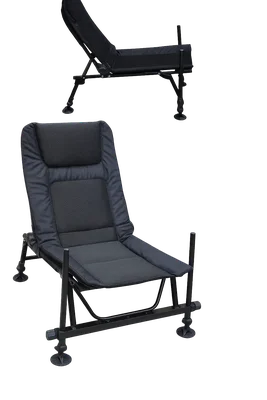
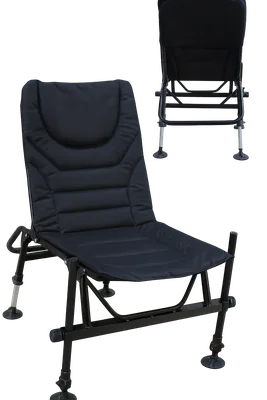
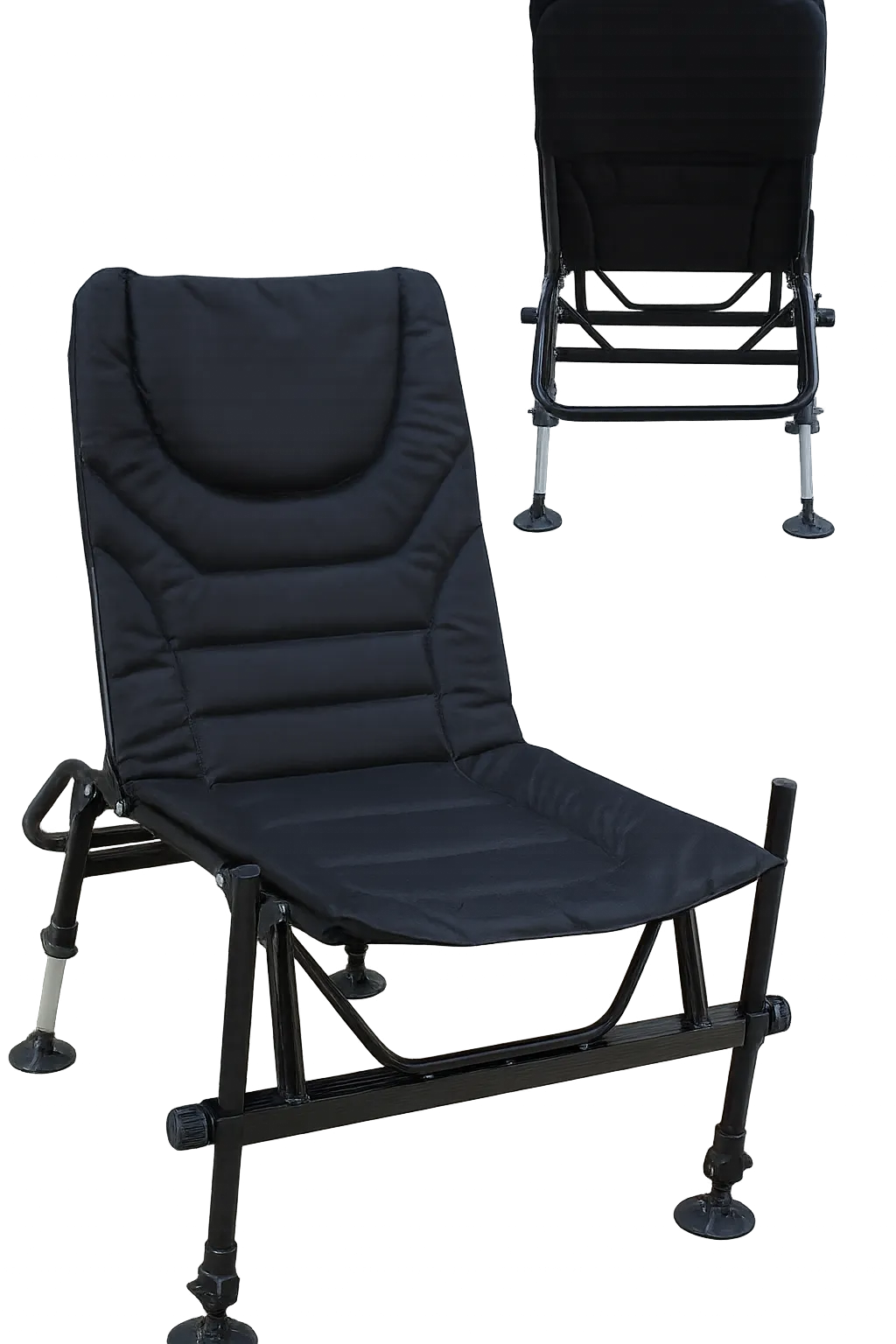
Last Tuesday, I sat at my desk with six factory quotes for the same carp fishing chair spec. 6061 aluminium frame, 600D Oxford fabric, adjustable legs with mud feet.
FOB prices ranged from $16.50 to $41. That is not a typo.
The $16.50 quote came from a factory I'd never heard of, with a response time of four hours.
The $41 quote came from a manufacturer we've worked with for seven years, who included a three-page attachment breaking down material costs by component.
Most procurement managers look at those two numbers and think: margin opportunity. I look at them and think: which one will cost me $8,000 in warranty claims by month six?
This guide is not about finding the cheapest chair. It is about understanding what each layer of cost buys you, and more importantly, what the absence of that cost takes away.
In This Guide
- The Three Price Tiers: What $18, $28, and $42 Actually Get You
- Where the Money Goes: A Component-Level Breakdown
- The Costs Your Quote Doesn't Show
- How to Read a Factory Quote Like a Production Manager
- What You Can Negotiate , and What You Cannot
- Container Load Math: Why Unit Price Is Only Half the Story
The Three Price Tiers: What $18, $28, and $42 Actually Get You
After fifteen years on factory floors across Zhejiang and Guangdong, I can group carp fishing chair pricing into three bands. They are not arbitrary.
Each band reflects a set of production decisions that are visible if you know where to look.
Tier 1: $14-18 FOB , The Entry-Level Steel Chair
At this price, you are buying a powder-coated steel frame, 600D Oxford fabric that may or may not be the density it claims, and basic plastic mud feet. The chair weighs around 3.7-4.2kg.
It will hold 120kg if the welds are good.
The weld quality is where this tier lives or dies. A proper double-sided weld on the leg joints takes about 90 seconds per chair. A single-sided rush job takes 40 seconds.
The $14 chair has a 40-second weld. You won't see the difference in a photo, but your customer will feel it in month eight when a leg wobbles.
What you get: A functional chair for price-sensitive markets where the end customer spends more time walking the bank than sitting. Good for starter kits and entry-level retail. Not for anyone who fishes more than 20 sessions a year.
Watch for: Fabric that fades in one season, plastic feet that crack in cold weather, missing CE documentation. Our factory evaluation guide covers what documentation to demand before deposit.
Tier 2: $22-30 FOB , The Aluminium Workhorse
This is where 90% of serious wholesale orders land. 6061 aluminium frame, 1.2mm wall thickness on the legs, properly padded 600D Oxford seat and backrest, adjustable mud feet with metal internals. Weight drops to 3.0-3.8kg. Static load rating: 130-150kg.
The price spread within this band comes down to three things: frame alloy purity, stitching density, and foam grade.
A $22 chair uses recycled-content aluminium that is slightly softer and a foam that compresses by roughly 15% after 100 hours of use.
A $28 chair uses virgin 6061 billet and 30kg/m³ medium-density foam that holds its shape through two seasons of weekly use.
This is the tier that makes or breaks a brand. If you are putting your own label on chairs, this is your floor. Below this, the chair becomes the brand. Above this, you are paying for premium features.
Tier 3: $35-55 FOB , The Premium Specification
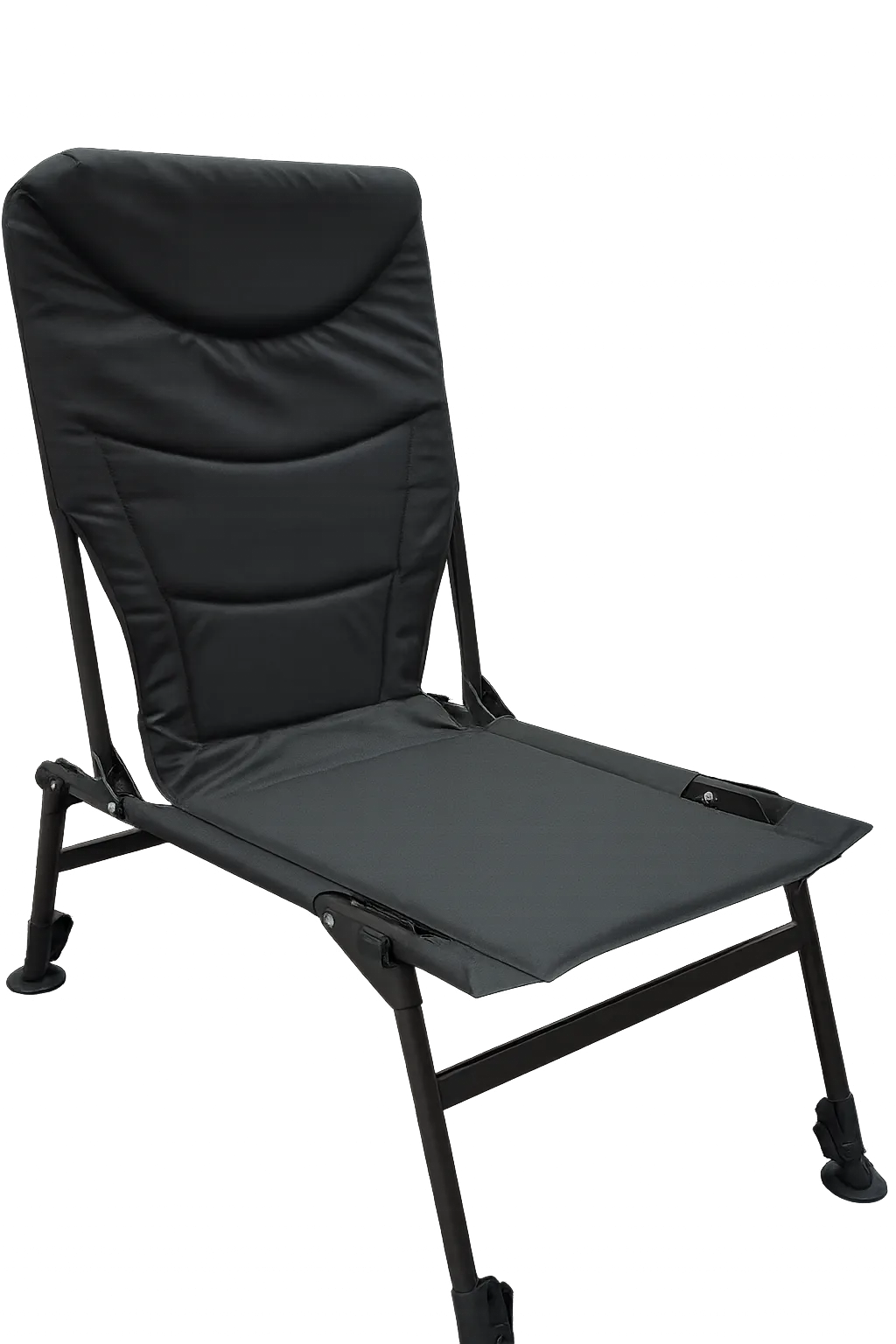
At this level you are specifying things that most buyers never ask about. 7005 aluminium alloy instead of 6061. 1.5mm wall thickness. 420D ripstop fabric on stress points. YKK zippers on storage pockets.
Double-stitched seams at 4 stitches per centimetre instead of 3.
The chair weight drops further , 2.6-3.0kg , but the load rating stays at 150kg or higher. That is the engineering premium. A Pro Feeder Chair at this tier is not just lighter.
It uses structural triangulation at the leg joints to distribute load without adding material.
This tier also buys you things that never appear in a spec sheet: a factory that runs its own QC lab, that tests every batch of aluminium for tensile strength, that keeps documentation for every component lot.
For brands selling into the UK and German markets, where refund rights and consumer protection laws are aggressive, these invisible extras are the difference between a 2% return rate and a 12% return rate.
For procurement managers building a premium private-label line, see our quality control standards guide for what testing to demand at each tier.
Where the Money Goes: A Component-Level Breakdown
Every factory quote is a sum of parts. Here is a realistic breakdown for a mid-tier aluminium chair at $26 FOB, based on what we see on our own production floor:
| Component | Share of FOB Cost | Approx. Cost | What Affects Price |
|---|---|---|---|
| Frame (6061 Al, 4 legs) | 35-40% | $9-10.50 | Alloy grade, wall thickness, tube diameter, weld count |
| Fabric (seat + backrest) | 15-18% | $4-4.70 | Denier, PU coating weight, UV treatment, foam density |
| Hardware (feet, bolts, rivets) | 10-12% | $2.60-3.10 | Metal vs plastic feet, stainless vs zinc bolts |
| Labour & Assembly | 18-22% | $4.70-5.70 | Region, weld complexity, stitching steps |
| Packaging (carton, inserts) | 5-7% | $1.30-1.80 | Single vs colour box, foam inserts vs corrugated |
| QC & Compliance | 3-5% | $0.80-1.30 | In-house vs third-party, batch vs per-unit testing |
| Factory Margin | 5-8% | $1.30-2.10 | Volume, relationship length, payment terms |
The frame is the heavyweight. It is also where the largest quality variance hides. When you see a $4 gap between two quotes for the same spec, check the frame alloy first.
A manufacturer who quotes 6061 aluminium but delivers recycled-content alloy has shaved roughly $3-4 per chair. You will not notice in month one.
You will notice in month fourteen when the leg tubes start developing hairline cracks at the bolt holes.
The Costs Your Quote Doesn't Show
FOB is the number on the quotation. It is not the number on your P&L. Here are the costs that live between the factory gate and your warehouse shelf:
Sea freight. A 40HQ container from Ningbo to Rotterdam runs roughly $3,500-5,500 depending on the season. At 2,200 chairs per container, that is $1.60-2.50 per chair.
During peak season (August-October, when retailers are stocking for Christmas), freight can spike 40%. Budget for the spike.
Import duties. The EU tariff code for fishing chairs (9401.79) carries a duty rate of roughly 0-5.6% depending on classification as aluminium vs steel furniture. Check with your customs broker.
A misclassification at 12% instead of 5.6% on a $50,000 shipment is a $3,200 error.
Warehousing and returns. A $26 FOB chair that generates a 5% return rate costs you the return shipping, inspection labour, and either refurbishment or write-off.
If each return costs $18 to process, your effective per-chair cost on 100 returned units is $2,780 , or roughly $1.26 per chair across a 2,200-unit container load.
A chair that generates a 1% return rate cuts that to $0.25.
QC inspection. Third-party inspection before shipment runs $300-500 per day. For a two-day AQL Level II inspection on a container load, budget $600-1,000. That is $0.27-0.45 per chair.
Skip it, and you are betting $50,000 on trust. I have watched that bet lose.
This is why the real cost of a chair is not $26 FOB. It is closer to $32-35 landed, and you have not yet paid for a single warehouse picker.
For a deeper dive, our container load pricing guide walks through the full landed-cost calculation.
How to Read a Factory Quote Like a Production Manager
When I receive a quote from a new manufacturer, I ignore the FOB price for the first sixty seconds. I look at these four things instead.
1. Is the alloy grade specified? "Aluminium frame" tells you nothing. "6061-T6 aluminium, 1.2mm wall, Ø25mm tube" tells you everything.
If the quote does not specify the alloy grade, the factory either does not know or does not want you to know. Neither is good.
2. Is the fabric denier stated with a coating weight? "600D Oxford" is a material name. "600D Oxford, 80g/m² PU coating, UV-treated" is a specification. The difference is roughly $1.20 per chair and two seasons of colour retention.
3. Is the packaging breakdown included? A quote that says "standard export carton" is incomplete.
A real quote says "single corrugated carton, 54×15×65cm, 3.7kg NW, 4.2kg GW, 2,200pcs/40HQ." That level of detail tells you the factory has actually shipped this product before and knows the container math.
4. Does the quote include a validity period? Raw material prices move. Aluminium ingot prices have swung 15% in six-month windows twice in the last three years.
A quote without a 30-day validity period is not a real quote. It is a suggestion.
What You Can Negotiate , and What You Cannot
Some buyers walk into a negotiation trying to shave 10% off every line item. That approach works once.
The manufacturer agrees, ships the order, and recovers the margin in the next batch by swapping the foam to a cheaper density. You celebrate saving $2,200.
Your customers start complaining about flat seats eight months later.
Here is what you can actually negotiate without compromising quality:
- Payment terms. Moving from 30% deposit / 70% before shipment to 30% / 70% against B/L copy is a real cash-flow win. Worth roughly 30 days of working capital.
- Packaging consolidation. If you order across multiple product categories (chairs, bedchairs, bivvies from the same factory), mixed-container loading can save $400-800 in freight per shipment.
- Tooling amortization. For custom colours or branded components, ask for the tooling cost to be amortized across the first three orders instead of paid upfront. Most factories will agree if the total order volume is clear.
What you cannot negotiate without quality impact: fabric density, foam grade, alloy purity, and weld time. The factory's cost on these items is rigid. If they drop the price, they are dropping the spec.
You just will not know which spec until the returns start.
Container Load Math: Why Unit Price Is Only Half the Story
A chair that costs $2 less FOB but packs 15% fewer units per container is not cheaper. It is more expensive.
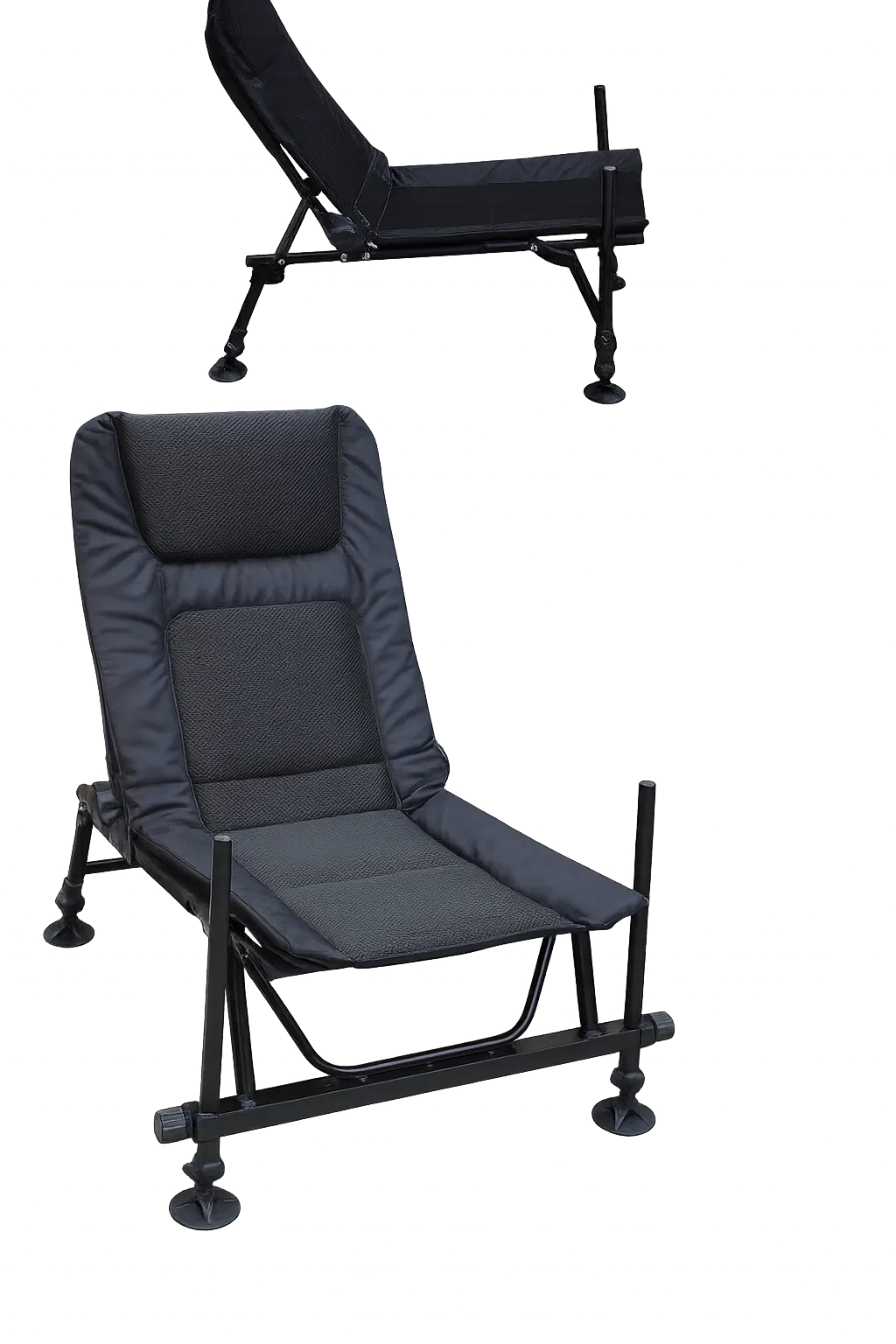
A standard carp fishing chair in a 54×15×65cm carton packs roughly 2,200 units into a 40HQ. A chair with a wider footprint , say 58×18×68cm , packs closer to 1,750.
At $3,800 freight per container, the freight cost per unit jumps from $1.73 to $2.17. That $0.44 delta eats most of a $2 FOB saving.
This is why packaging engineering matters. A Pro Accessory Chair with a modular design that allows partial disassembly for flat-packing can reduce carton volume by roughly 12-18%. That is not a packaging decision.
It is a margin decision disguised as a cardboard box.
The math works both ways. A chair sold at $28 FOB that packs 2,400 units per 40HQ has an effective landed cost that can beat a $25 chair that only fits 1,900.
Do the container math before you compare FOB prices.
Sources & Industry References
- Statista: Fishing Industry Data , Market size parameters for fishing equipment pricing context
- Grand View Research , Fishing equipment market sizing and B2B trade flow analysis
- China Customs Export Data , Fishing chair export volumes and average unit values, 2025-2026
Want a Factory Quote That Actually Tells You Something?
We provide component-level pricing transparency, alloy certification, and packaging optimization as standard. No generic "export carton" lines.
Request a Detailed Quote(Pricing ranges in this guide are based on our production experience and current raw material markets as of June 2026. Actual quotes will vary by volume, specification, and factory conditions.)