In This Guide
Introduction
Every carp fishing chair you ship to a distributor today is a future spare parts order. Cushions, armrests, mud feet and knobs wear out long before the frame does, and anglers replace them rather than buy a new chair. That aftermarket demand is a repeatable revenue stream most product lines never deliver. For the manufacturing side of this topic, see the OEM Carp Fishing Gear Guide.
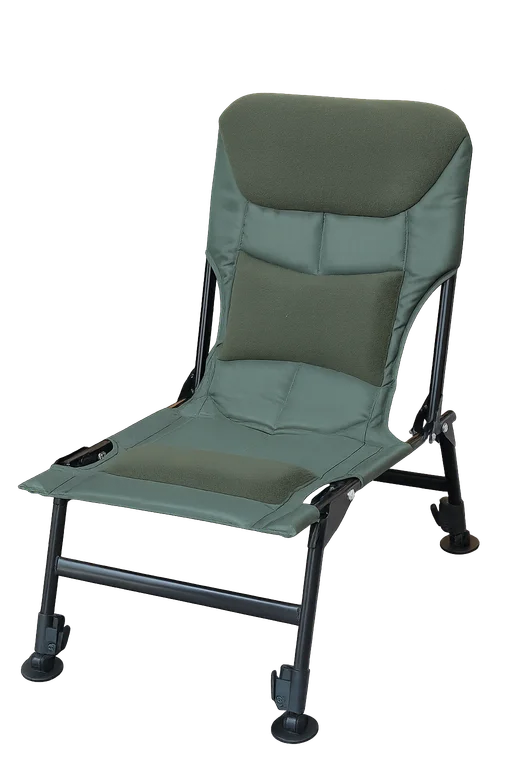
Every component on a carp chair is a future reorder
Spare parts sourcing has its own rules: fit tolerances, material matching, load-rated components, and MOQ structures all differ from complete chair procurement. This guide covers the parts that fail first, how to specify replacements that match your range, and how to build a parts line that earns margin without tying up warehouse space.
Why Distributors Add a Spare Parts Line
Complete chairs compete on price with every other brand in your market. Replacement parts compete with almost nobody. The angler who owns your chair does not cross-shop a competitor's cushion; they buy the part that fits, usually from the shop that sold them the chair.
Three structural advantages make parts attractive:
- Repeat purchase cycle: a chair sells once, but its cushion and mud feet sell two or three times over its service life.
- Lower price sensitivity: customers compare a cushion against the cost of a new chair, not against another cushion.
- Compact freight: a carton of cushions or leg kits costs a fraction of a chair carton to ship.
Parts also de-risk your catalogue: you are matching components to chairs you already sell, and a slow part can be dropped with no redesign cost. Building your main range? Start with our carp fishing chair wholesale guide.
The Parts That Wear Out First on Carp Fishing Chairs
Failure patterns tell you which SKUs to stock first. These are the components distributors reorder season after season.
| Part | Typical failure | Why it drives repeat orders |
|---|---|---|
| Seat cushion and backrest pad | Foam compresses, fabric fades or splits | Sitting hours plus UV and rain |
| Armrests and side pads | Foam flattens, cover tears | Constant arm pressure |
| Leg sections and mud feet | Feet sink or crack on hard banks | Bankside terrain is brutal |
| Adjustment knobs and locking collars | Knobs crack, threads strip | Plastic fails under repeated torque |
| Frame connectors and bushings | Rivets loosen, bushings wear | Joints carry full load on every use |
| Mesh panels and netting | Snags, tears, UV degradation | Exposed to sun and hooks |
| Buckles, straps and webbing | Fraying, corroded buckles | Simple, cheap, visibly worn |
Legs and connectors are where quality matters most. A failing cushion is an inconvenience; a failing leg is a safety issue, so replacements must carry the same rated capacity as the original. Our carp fishing chair weight capacity guide explains how ratings are tested and labelled so you can match parts to the right tier.
Specifying OEM Spare Parts That Match Your Chairs
Spare parts OEM is matching work. The two questions buyers ask most: will it fit, and will it look right? Both are answered in the specification.
Seat cushions and backrest pads
600D to 1000D Oxford polyester with PU backing is standard for carp chair upholstery. Specify foam density and thickness (high-resilience foam at 30 to 45 kg/m3 is typical) and confirm compression set so cushions keep their shape. Send a worn sample or the original pattern for an exact match.
Legs, frames and connectors
Leg sections and frame connectors are usually 22 mm or 25 mm 6061-T6 aluminium with 1.2 to 1.5 mm wall thickness. Specify powder coat colour by RAL number so replacements match the chair generation they serve, and keep drawings archived so older models stay reorderable. Our carp fishing chair frame materials guide compares the options in detail.
Hardware and fittings
Knobs, collars, rivets and bushings are where low-cost suppliers cut corners. Specify stainless or zinc-plated steel fasteners, nylon bushings at pivot points, and knobs with metal inserts where threads take repeated load.
Tolerances and verification
Fit is everything. Agree tolerances, typically plus or minus 5 mm on cushions and plus or minus 1 mm on tube diameters and hole spacing, and verify the first batch against a master sample. Our carp fishing chair quality control standards walk through the framework in detail.
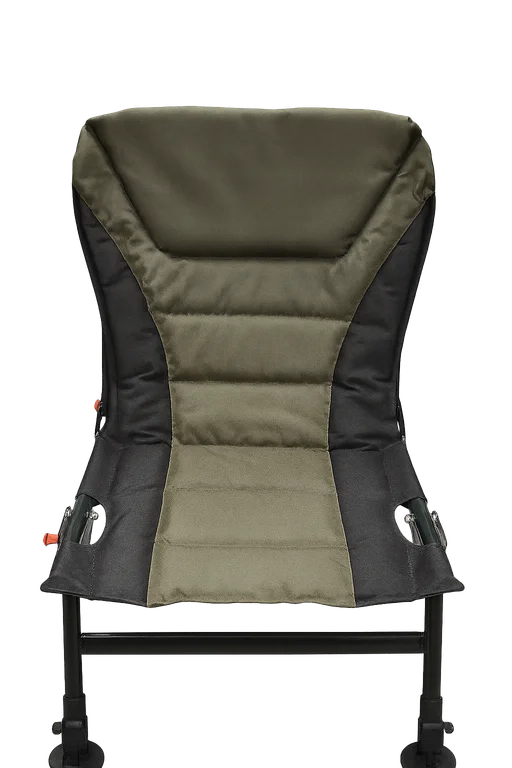
A bankside setup is a bundle of future replacement orders
MOQ and Combined Order Strategy
Spare parts MOQs run lower than complete chair MOQs, which makes them attractive as a second line. Indicative starting points are 200 to 300 pieces per SKU, with lower minimums when ordered alongside main chair quantities.
Combined orders are the standard structure: parts ride in the leftover cube of a container already carrying chairs or bedchairs. Freight is shared across the whole shipment, and one consolidated shipment beats several small ones on handling cost and lead time.
Before committing to production quantities, order one or two samples and test them against your current stock. A cushion 5 mm off in width, or a leg whose collar does not seat cleanly, will generate returns that erase the margin. Our factory verifies sample fit against customer stock before every batch starts.
Quality Control Checklist for Spare Parts
Parts get less QC attention than complete chairs in many factories, so your checklist should be tighter. Our quality control guide applies with equal force.
- Welding: inspect weld penetration and surface finish on every batch of load-bearing parts, and require load testing at 1.5x rated capacity on samples.
- Stitching: for cushions and pads, check stitch density and seam strength on a cut sample. Seams that open after two seasons become warranty claims, not reorders.
- Materials: verify fabric denier, foam density and powder coat thickness against the spec sheet, not the sales description.
- Sampling: apply AQL sampling like any other category; dimensional checks on critical fits matter more than cosmetics. A cushion must mount, a leg must lock.
- Packaging: parts travel in mixed shipments, so pack each one individually to survive transit and arrive saleable.
For a broader look at evaluating the production partner, our carp fishing chair factory guide walks through the audit process.
Frequently Asked Questions
Indicative MOQs for standard parts such as seat cushions, mud feet or adjustment knobs typically start around 200-300 pieces per SKU, lower than for complete chairs. Ordered together with main chair quantities, minimums can often be reduced. Confirm the structure before seasonal planning.
The most reordered parts are seat cushions and backrest pads, armrests, mud feet and leg sections, adjustment knobs and locking collars, frame connectors and bushings, mesh panels, and straps and buckles. Cushions wear through foam compression and fabric ageing; legs and feet take the hardest bankside abuse.
Yes, this is standard OEM matching work. Send a worn sample or the original pattern with foam density, fabric weight and colour, and stitching details, and the factory reproduces the cushion to fit your existing frame. Keep patterns archived so older generations stay reorderable.
Fit and load. Agree tolerances, typically plus or minus 5 mm on cushions and plus or minus 1 mm on tube diameters and hole spacing; specify fabric weight, foam density, powder coat RAL numbers, and stainless or zinc-plated hardware. Replacements must meet the original load rating.
Usually yes. Combined orders let parts ride in the leftover cube of a container already carrying chairs or bedchairs, sharing freight across the whole shipment. Many distributors place one parts order per season, then top up fast-moving SKUs.
Sources & Industry References
- European Fishing Tackle Trade Association (EFTTA): European angling equipment distribution and accessory trends.
- ASTM B221 / B221M: standard for aluminium-alloy extruded tubes, reference for 6061-T6 properties.
- ISO 9001:2015: quality management systems standard; request current certification from suppliers.
- EU REACH Regulation: chemical compliance for fabrics, coatings and hardware finishes.
Ready to Add a Spare Parts Line to Your Chair Range?
Tell us which chair models you carry and we will map the matching replacement parts, sample fit, and MOQ structure for your market.
Request a Consultation(This guide is updated periodically to reflect changes in material specifications and sourcing practices. Last updated: August 2026.)